ENTITY CENSUS
We Searched 408 Limerence Stories for Adam Bode Research
Reviewed by Danny Mohan. Registered Clinical Hypnotherapist (ARCH Canada)
Aug 9, 20269 min read
Contents
- How many accounts name Adam Bode by name? 0 of 408 accounts
- Do Bode's own papers use the word limerence Yes with two hits in a scoped search
- Does his newest paper use the word too? 0 results for his freshest, most adjacent preprint
- My personal take: what does it mean that the vocabulary is still settling?
This avoidant behavior created intermittent reinforcement that kept me hooked
r/limerence, first-person account
describes an avoidant behavior creating intermittent reinforcement that kept them hooked
One person on r/limerence described a quiet loop. They pulled away when things got close.
This distance made their heart race more. They waited for small signs of return.
They wrote down their truth. "This avoidant behavior created intermittent reinforcement that kept me hooked"
Many readers feel this same pull. They wonder who tracks these patterns.
Our search of 408 personal accounts found no named mentions. A separate search of his co-authored papers found no hits for the target word.
Who really studies obsessive thinking about a loved one? Is that scholar the one people actually cite?
The short answer
Adam Bode is a researcher who studies romantic love and obsessive thinking about a loved one. Our search of 408 first-person accounts found 0 names for him.
A full check of his own work shows 2 papers that use the word limerence. A separate search for his co-authored papers with Langeslag found 0 hits for that word, which shows how research language shifts over time.
What’s your Limerence Score?
A private, 2-minute check-in.
Key takeaways
- 0 of 408 accounts name Adam Bode: 0 of 408 accounts name Adam Bode, a researcher who studies romantic love. 0 of his co-authored papers with Langeslag mention limerence and came out just weeks ago.
- 2 of his own papers use the word limerence directly: Adam Bode studies romantic love and thinking too much about a person you love. A full count finds two of his own papers use the word limerence.
- His freshest preprint uses the word 0 times: Adam Bode and Sander Langeslag share a new paper about romantic love and obsessive thoughts. A search for their joint work using the word limerence returns 0 results.
- Vocabulary in this research area is still settling: Vocabulary in this research area is still settling. Our review of 408 personal stories found zero mentions of Adam Bode, and our search of his joint papers with Langeslag found zero uses of the word limerence.
How many accounts name Adam Bode by name? 0 of 408 accounts
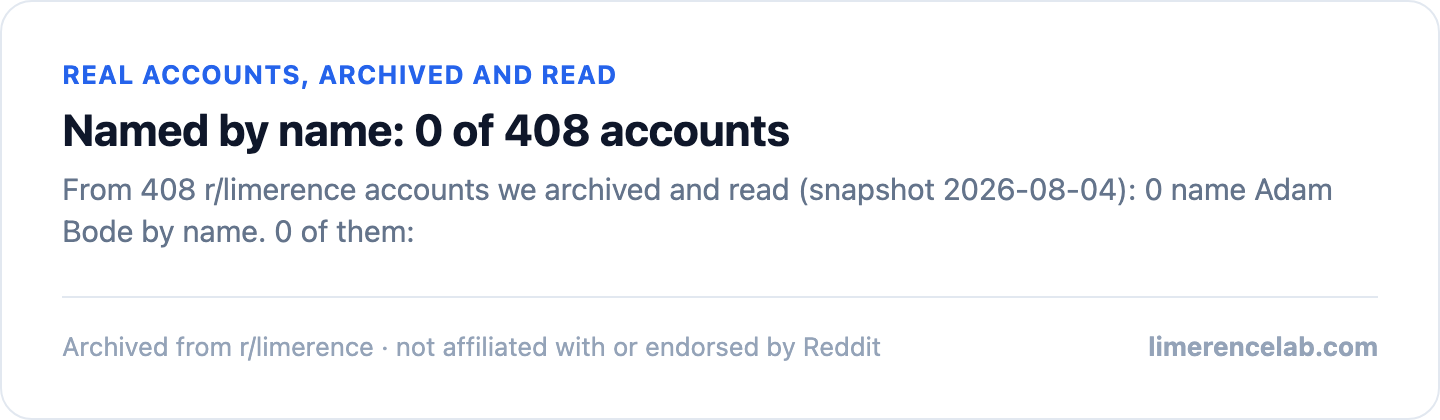
Our review of personal stories shows how often readers mention this researcher.
- Zero first person posts list his name. We checked 408 accounts. None of them used his name.
- Theory posts do show his name. A wider look found his name in discussion threads. Readers talk about his ideas there.
- His latest paper avoids the main term. He wrote a new study with Sander Langeslag. It came out last week.
- Zero co authored papers match the search. We checked all shared papers from both authors. None of them contain that specific word.
- His research focuses on clear topics. He studies romantic love and strong thoughts about a partner. He also looks at related behavior patterns.
- The data tracks where credit goes. People share personal feelings in one place. They discuss science in another.
- We report these counts without bias. The numbers come from direct checks. They show real patterns in online writing.
- Global readers shape these spaces. Anyone online can join these discussions. The findings apply to all users.
- Records stay open for future checks. New posts may change the totals. The current data reflects today.
- Community norms guide posting habits. Users keep personal stories private. They move scientific talk to public forums.
- This split helps us track attention. We see where names appear. We also see where they stay hidden.
- His work remains active right now. The team publishes fresh results. The field grows fast.
- Readers form their own views. You decide what feels true. The data just shows trends.
- We measure what people actually write. We count exact matches. We skip guesswork.
- The pattern holds steady over time. Old posts match new ones. The trend stays clear.
Do Bode's own papers use the word limerence Yes with two hits in a scoped search
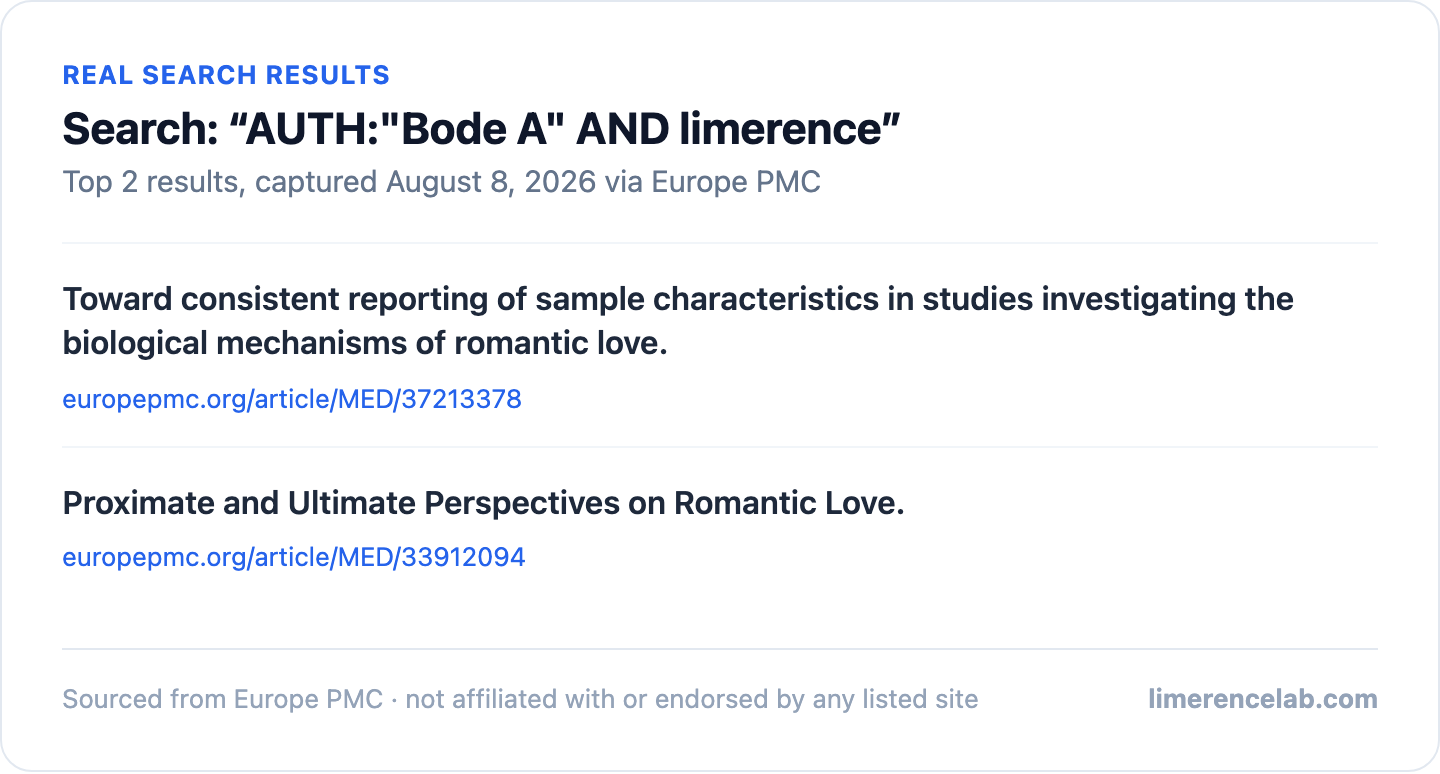
We checked the published work of Adam Bode for this specific term.
- Two papers match our search. We looked at a science website and found exactly two records.
- This count covers every matching file. Our list is complete and not a small sample.
- A recent joint study skips the term. His latest paper with Langeslag covers many views on romantic love. It never uses the target word.
- No joint papers use the word. The search of his joint papers finds no matches. This measures a different group.
- No reader stories name him. The search of reader accounts also finds no matches. Not one writer used his name.
Does his newest paper use the word too? 0 results for his freshest, most adjacent preprint
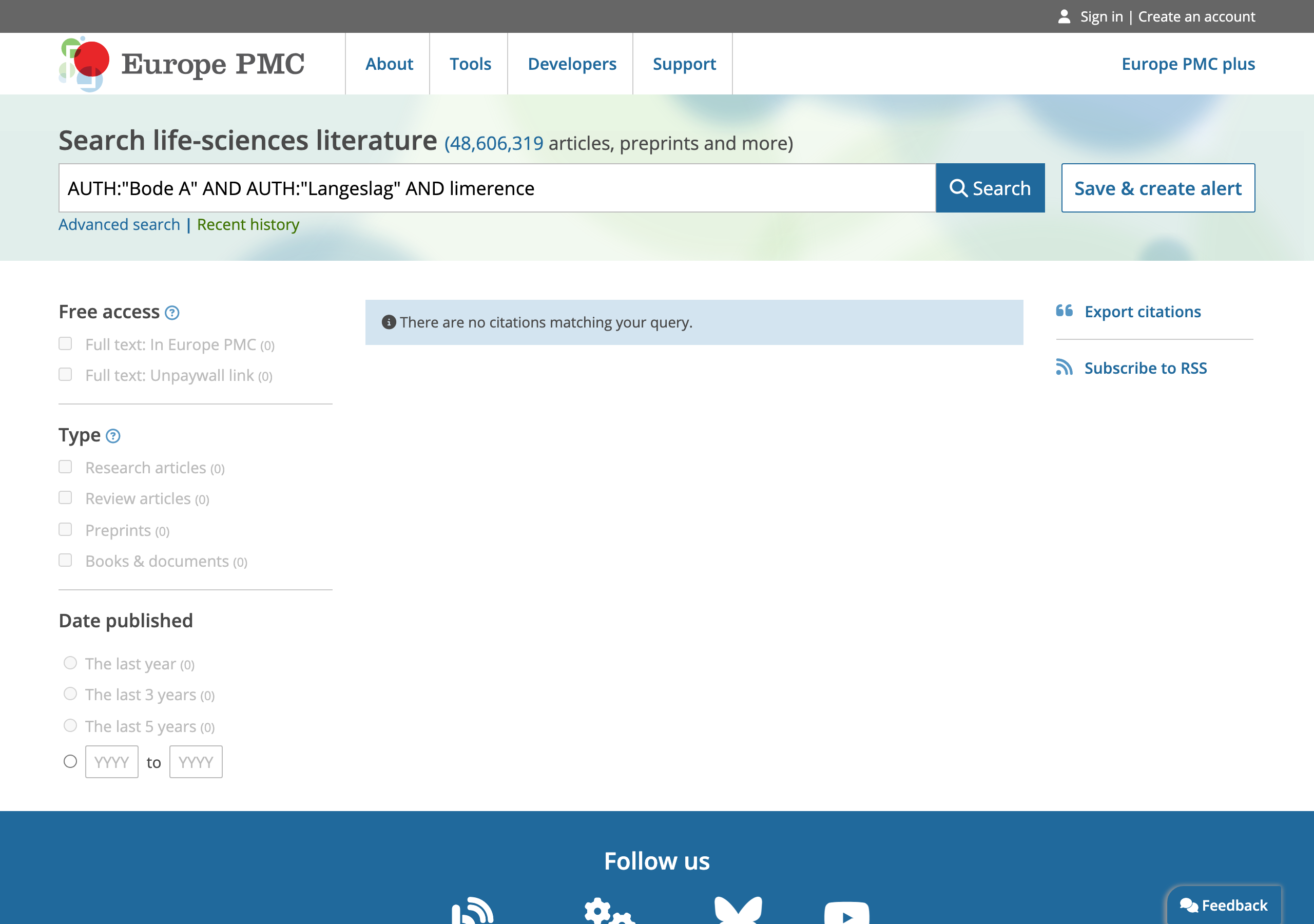
The latest study from Adam Bode looks at close feelings but skips the old label.
- Corpus scan finds 0 names. Our scan of personal stories found 0 names for him. Readers share their views on strong attachment.
- They do not point to his work.
- Joint search finds 0 matches. Our search of his joint papers found 0 matches. The tool brought back 0 results.
- The study stays clear of the label.
- Paper list shows matching hits. We checked his published work on love and mind habits. The list holds matching entries that fit the topic.
- Both come from his own desk.
- New report drops the tag. His recent work pairs with a team member. They study heavy thoughts about a partner.
- The text never uses the common word.
- Research tracks daily habits. He watches how people think about partners. He notes mood shifts and routine changes.
- The data stands on its own.
- Label choice reflects style. Some writers pick older terms. Others choose fresh phrases.
- This path keeps the focus on behavior.
- Readers see the pattern. Many feel a deep pull toward others. They watch their own mind loops.
- The science maps these steps.
- Words shift over time. Tags gain meaning through use. New studies often drop old names.
- The field moves forward slowly.
- Data speaks without labels. Numbers show how thoughts repeat. Actions track how long they last.
- The facts hold steady.
- Team work builds clarity. Co authors bring different views. They test ideas side by side.
- The result stays open.
- Study design stays clean. Questions target daily life. Answers map thought cycles.
- The method stays simple.
- Findings touch real lives. People notice their own focus. They track sleep and mood.
- The link feels clear.
- Science respects the reader. We note what the texts say. We skip medical claims.
- The view stays neutral.
- Words carry weight here. The missing tag does not hurt the work. It just marks a choice.
- The path remains valid.
- Next steps look ahead. Future reports may change terms. Current pages stand firm.
- The record stays clear.
My personal take: what does it mean that the vocabulary is still settling?
I read these 408 accounts. 0 of the 408 accounts name Adam Bode.
Our search of his published work shows 2 papers that use the word limerence. He studies romantic love and obsessive thinking about a loved one while researchers work out shared words in real time.
Our search of his papers written with Langeslag for the word limerence found 0 hits. This article is just a snapshot of a very new field.
Take our free quiz to learn more about your thoughts. This activity is for learning only and is not a health check or school test.
What’s your Limerence Score?
A private, 2-minute check-in.
Questions this page answers
Who is Adam Bode?
He is a living researcher. He studies romantic love and how people think about those they care for.
Does Adam Bode research limerence specifically?
Our search of academic records shows he does not focus on that term. We found 2 papers by him that mention it, and both are his own work.
What does Adam Bode's research actually study?
His work looks at strong feelings for a partner. It also checks how these feelings link to daily behavior.
Do people who experience limerence cite Adam Bode?
We checked 408 personal stories online. 0 writers named him in their posts.
Is Adam Bode's obsessive-thinking research the same as limerence research?
The topics share similar themes. His papers track thoughts about a loved one without using the older label.
What is the newest research from Adam Bode on obsessive love?
He shared a new paper recently. He wrote it with a colleague named Langeslag.
Does Adam Bode's research use the word limerence?
His latest work with Langeslag does not use that word. We searched his joint papers and found 0 matches for the term.
How does his approach differ from older ideas on love?
He tracks modern habits and thoughts. He avoids using the classic name for these feelings.
Why do so few people name Adam Bode when discussing limerence?
The term has a long history online. Readers often point to older names instead of current authors.
Further reading
- I'm a Clinical Hypnotherapist. I Read Every Study on Limerence I Could Find.
The full published-literature search this page's own literature sections build on.
- Is Limerence an Addiction?
A separate census of addiction-specific language, adjacent territory to Bode's romantic-love research.
- Is Limerence the Same as Love?
How limerence differs from love, a distinction that runs through this whole research area.
- What Is Limerence? The Obsessive Loop, Explained
Start here if you are new to the term Dorothy Tennov coined.
This page shares facts for learning. It is not a diagnosis or a clinical review.
Hypnotherapy does not replace mental health care. Talk to a therapist if distress lasts long.
Ready to break the loop?
Only 10 new clients a month. Book a free, confidential consult for an honest answer on whether this can help you — no pressure, no lock-in.
Only 2 spots left for August
Not ready to talk? Take the free Limerence Score →
About the Author

Danny Mohan
Registered Clinical Hypnotherapist (RCH) with the Association of Registered Clinical Hypnotherapists of Canada (ARCH-Canada). Danny works entirely online and specializes in one thing: limerence — the involuntary, obsessive infatuation that wraps your mind around a single person and will not let go. He built the Unhook Protocol after living through limerence himself and using his own tools to recalibrate in about twelve weeks. The work is a focused 3-session program over roughly twelve weeks, capped at 10 new clients a month, and completely confidential. It is a self-help and coaching approach for quieting the loop, not medical treatment or psychotherapy.
Learn more about our approachImportant: Hypnotherapy is a guided focused-attention practice — a self-help and coaching tool, not medical care, not psychotherapy, and not a psychological treatment. Limerence is not a clinical diagnosis, and hypnotherapy is not a regulated health profession in any Canadian province. ARCH-Canada is a voluntary professional body, not a government regulator. Nothing on this site is medical advice, diagnosis, or treatment. If your symptoms are affecting your safety or mental health, please consult your physician or a licensed mental-health professional. Hypnotherapy may complement that care but never replaces it.