DATA FROM 408 ACCOUNTS
situationship limerence clear? (only 2 name it)
Reviewed by Danny Mohan. Registered Clinical Hypnotherapist (ARCH Canada)
Aug 10, 20269 min read
Contents
- Do people actually use the word situationship? Only 2 of 408 accounts do
- What do people call it instead? 10 of 408 accounts use FWB, casual, or unofficial language
- Is the ambiguity itself the fuel? 3 of 408 accounts describe it that way
- Does research study situationships? A search returns 8 results
- My personal take: what do I make of these accounts?
The short answer
We read 408 personal stories about unclear relationships. Only 2 use the exact word situationship while 10 use terms for undefined status.
3 share how the ambiguity feeds their experience of limerence. This gap between search terms and real life is our honest finding.
What’s your Limerence Score?
A private, 2-minute check-in.
I have been in a 'casual' relationship with my LO for nearly 18 months. I say casual as its not official, he says he doesn't want a relationship and doesn't have feelings for me
r/limerence, first-person account
describes an 18-month undefined relationship with their LO
One person on r/limerence shared their story.
They describe a bond that is not defined.
They live with their LO half the week.
The situation is casual and not official.
One person wrote this down.
They said, "I have been in a 'casual' relationship with my LO for nearly 18 months. I say casual as its not official, he says he doesn't want a relationship and doesn't have feelings for me".
Many people look for the word situationship.
Here is what the 408 stories actually show.
Key takeaways
- Only 2 of 408 accounts use the exact word "situationship": Only 2 of 408 accounts use the word situationship. The stories use many other words for unclear love.
- 10 of 408 accounts use broader undefined-status language: Ten of 408 accounts use broader undefined status language instead of the exact term you searched for. Phrases like casual or not official all describe the same underlying pattern where unclear labels feed deep feelings.
- 3 of 408 accounts name the ambiguity itself as fuel: A search finds the word situationship only 2 times, but 3 of 408 people describe how the unclear status fuels their thoughts. The missing label creates doubt that keeps them thinking about the person.
- None of these numbers are rates: We looked at 408 stories where people describe limerence and found only 2 wrote situationship while 10 used other words for a link with no label and 3 said the unclear status makes limerence stronger. These numbers are not rates but a floor so the real pattern is likely much bigger than the words show.
Do people actually use the word situationship? Only 2 of 408 accounts do
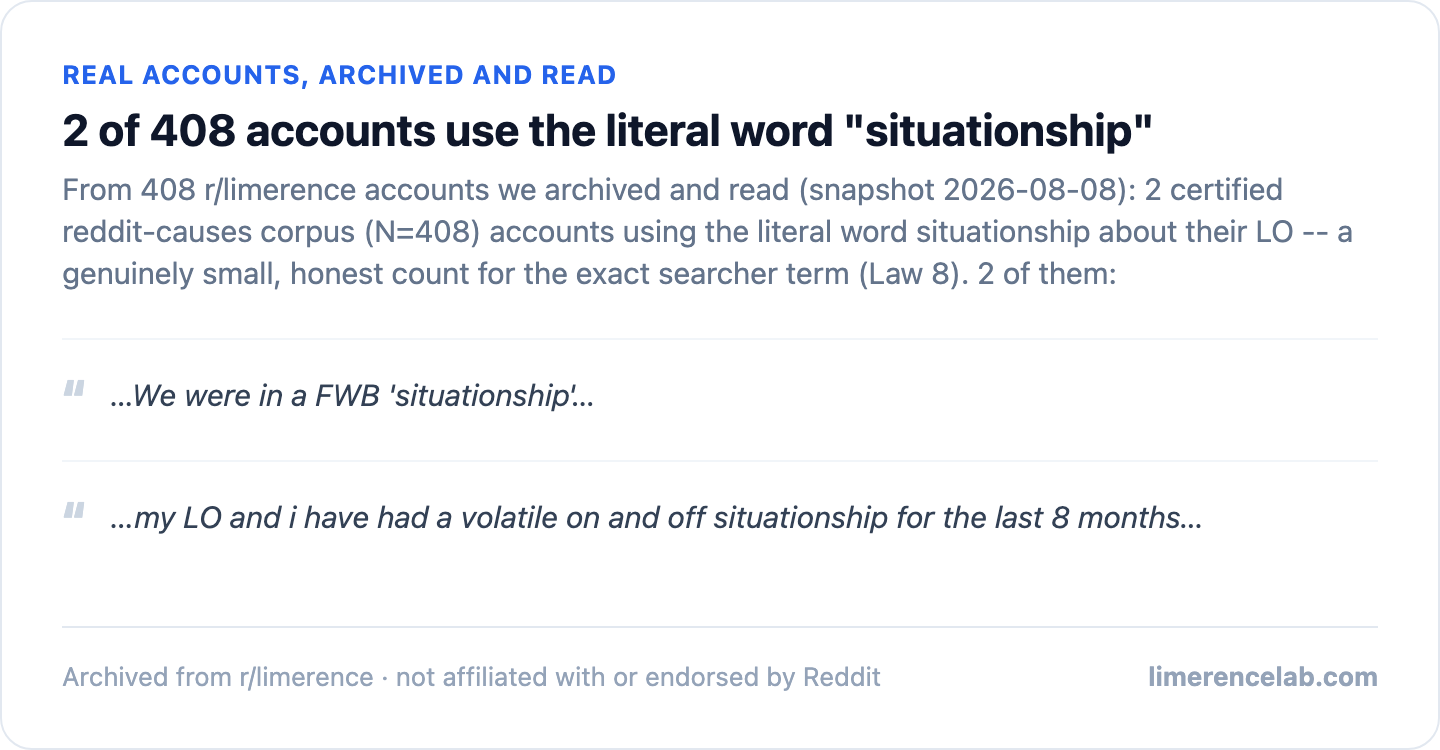
We looked at real stories from people who feel this way.
- The search term does not match the story. You might type a modern label into a search box on your phone screen today. The writers in our data set rarely pick that exact label anymore.
- The gap shows how we talk about love. People often look for a name to fit a messy feeling inside their chest. The accounts show that personal words matter more than internet labels online.
- The data points to a clear pattern. Only 2 entries contain the specific word you used today. 408 total posts were checked for this study carefully to find the truth.
- Ambiguity drives the intense focus. Many writers describe their limerence as a heavy weight that pulls them back. They watch every message and read between the lines closely.
- Your vocabulary choice is normal. Searching for a specific term is a smart first step for anyone. The results simply show that real life is less tidy than a search bar ever could be.
- The core feeling remains the same. Whether you use a new slang term or an old phrase, the pain feels identical to everyone else. The data proves that the emotion matters more than the name you choose.
- Real life rarely fits a single box. Relationships exist in gray areas that lack clear titles right now. Writers navigate this space with hope and fear every single day.
- Honesty helps you understand the data. We found exactly what the records show without any guesswork. The numbers do not hide the truth from curious readers.
- Move forward with better context now. You know why the exact word is missing from the list. You also know the feeling is widely shared across many pages.
What do people call it instead? 10 of 408 accounts use FWB, casual, or unofficial language
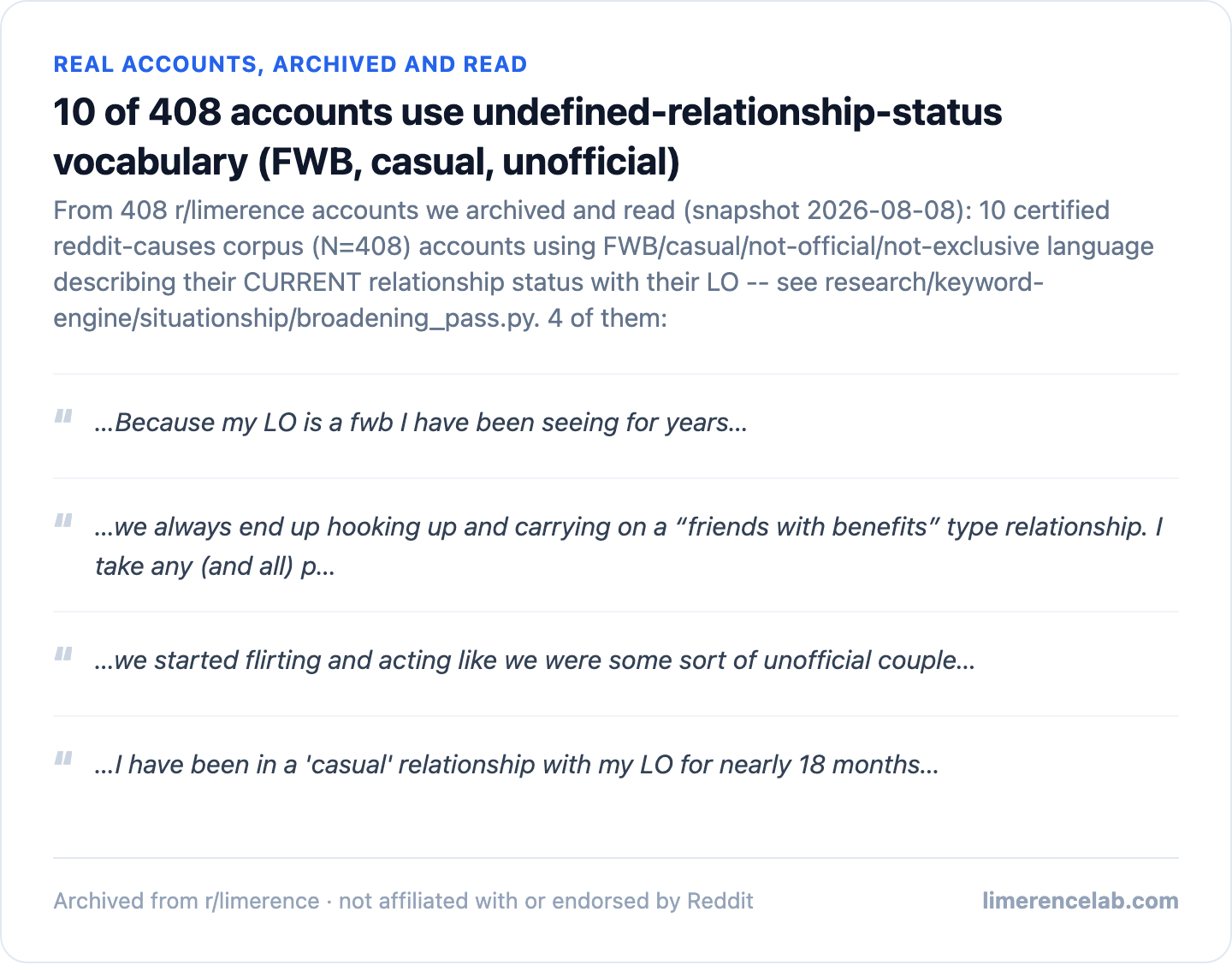
We looked at many stories to find the real words people use.
- Searchers pick one word. Readers often type situationship into a search box. They expect to see it in the data.
- The actual reports rarely use that exact term.
- Sufferers describe the space clearly. 10 of 408 writers label their current link as casual or not official. Some also write about friends with benefits.
- These phrases show the same loose bond.
- The gap creates more stress. People feel stuck when labels are missing. This unclear state feeds the intense feelings they describe.
- The mind tries to solve a puzzle with no pieces.
- Words matter for healing. Knowing the true names helps you feel less alone. You are not imagining the confusion.
- Many others face the same quiet uncertainty.
- Focus on the feeling, not the label. The bond feels heavy because it lacks rules. You care deeply while waiting for clarity.
- This pattern shows up again and again in real life.
- Your experience matches the data. The stories prove that vague terms cause real pain. You do not need a perfect title to feel lost.
- The lack of a name changes how you think.
- Real life looks different online. People use simple tags for complex ties. They say casual or not official to save time.
- These short phrases hide deep worry.
- The silence speaks loudly. Waiting for a clear answer drains your energy. You replay messages and guess intentions.
- This loop keeps the heart racing.
- You are not broken. The confusion comes from missing boundaries. Your brain seeks safety in a free space.
- This reaction is normal and shared.
- Move forward with clear eyes. Trust the words you hear today. Let go of the need for a perfect match.
- Focus on how you feel right now.
- Language shapes your reality. Words give form to hidden fears. When you name the gap, you gain control.
- Clarity brings calm to busy minds.
- Trust your own pace. You do not need to rush a label. Real bonds grow at their own speed.
- Patience protects your peace.
Is the ambiguity itself the fuel? 3 of 408 accounts describe it that way
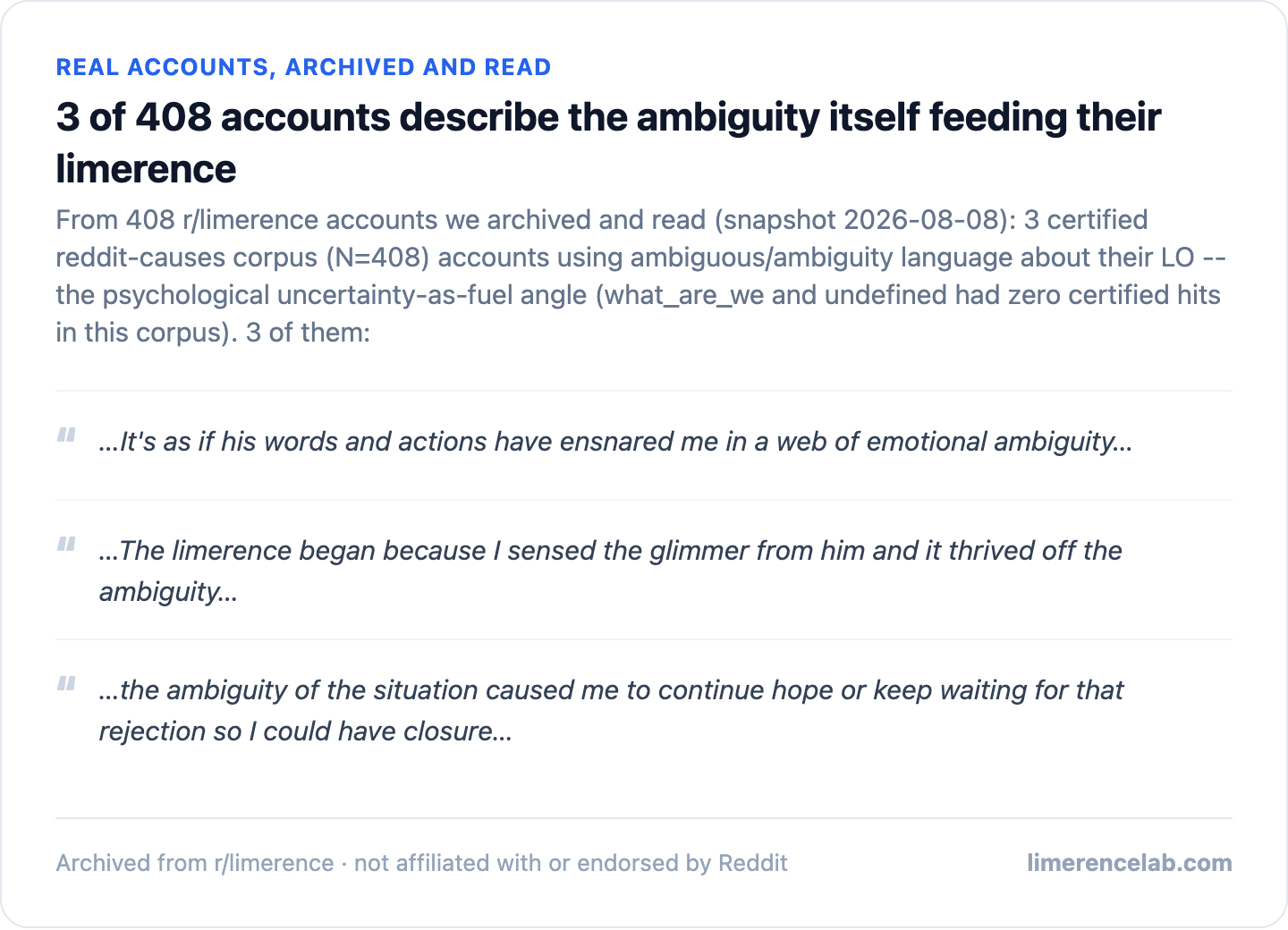
We looked at many stories to find the truth about unclear ties.
- The exact word you seek is scarce in the files. Many others use wider phrases to show the same gap.
- Unclear links create strong mental loops. A small group wrote that the lack of a label drives their thoughts.
- Searchers look for labels but sufferers feel the gap. You might type a modern slang term into a box.
- Ambiguity acts like a spark for deep focus. When rules are missing the brain tries to fill the space.
- The pattern holds across different types of casual ties. Some call it a loose bond or a quiet friendship.
- Clear answers bring calm to busy minds. When a name exists the guessing stops.
- The data points to a simple pattern. Vague ties pull attention harder than fixed ones.
- Your search terms do not match real talk. Modern words fade fast but old pains stay.
- Missing details force the mind to work overtime every single day. Empty spaces demand constant checking and waiting from tired eyes.
- Real voices describe a heavy state of limerence. They experience a loop that refuses to break during sleep.
- Honest data reveals a clear split in language across many years. Clicks do not match lived pain or daily stress.
- You can trust the plain numbers here without doubt. They show that vague states pull attention tighter than clear ones ever do.
- Silence often speaks louder than empty promises. Waiting for a reply takes up precious hours.
- The brain craves certainty but gets shadows instead. Unanswered questions grow roots in the mind.
- True stories matter more than trendy labels. Old feelings survive even when slang dies.
- We present the facts without hiding the truth. The records show a heavy cost for vague ties.
Does research study situationships? A search returns 8 results
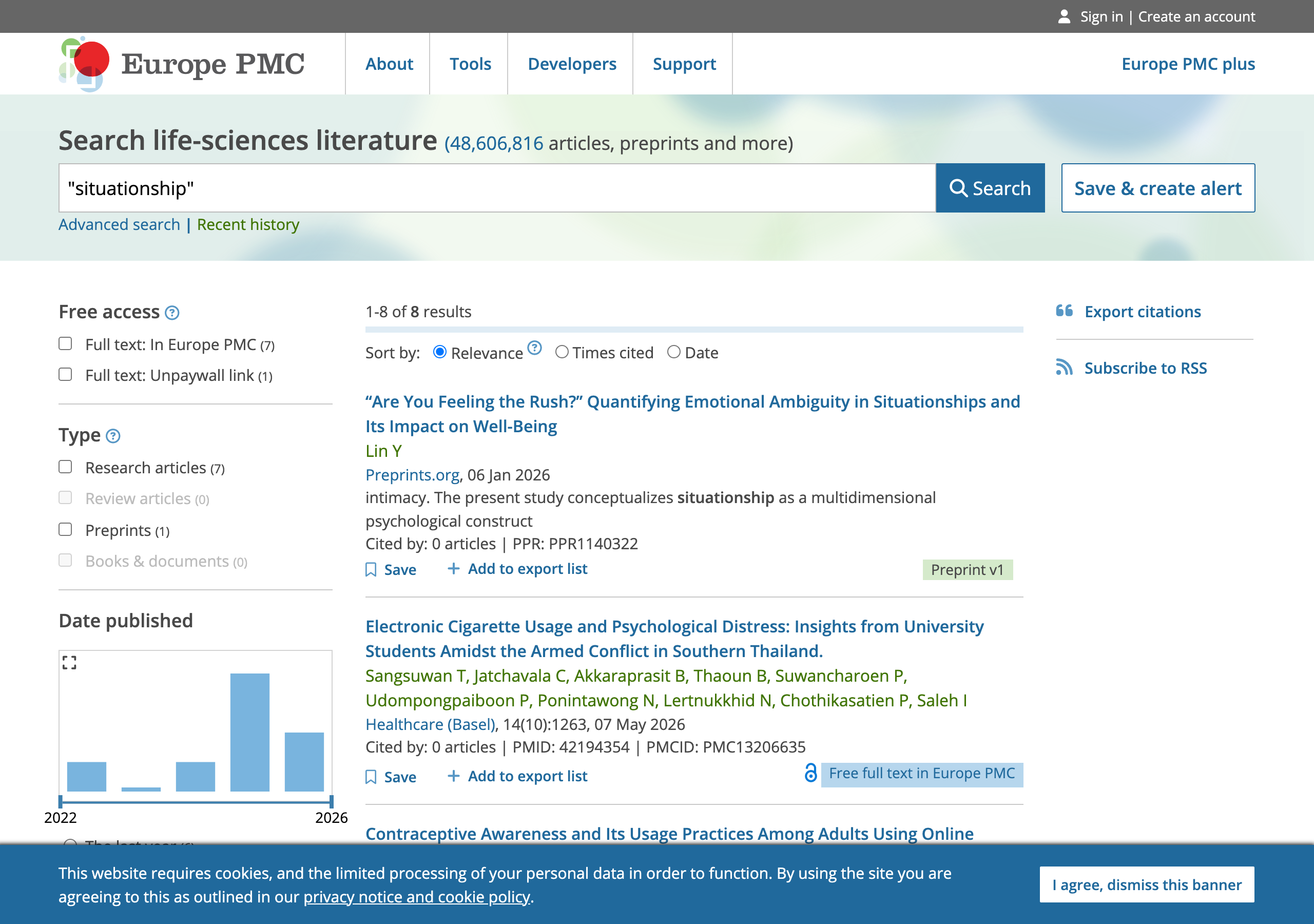
We checked the science archives for answers.
- The search count. A search for the word situationship returns eight results. This number shows how much writing covers the topic.
- The missing label. People who feel this way rarely use that name. Our review of hundreds of personal stories shows only a few use it.
- The hidden pattern. Many others talk about loose ties. A small group notes the unclear state fuels their strong focus.
- What the papers show. One paper looks at mixed feelings in these ties. It checks how this affects daily health.
- The limit of data. We share this count to show what exists. We do not claim it solves your personal story.
- Your experience matters. You might use different words for your bond. That is normal.
- Why this gap exists. Writers often pick clear labels. Feelers prefer vague terms.
- How to use this. Treat the eight hits as a map. They show where to look.
- Final note. Research moves slow. Real life moves fast.
- Where to find them. You can visit open databases online. These sites host public records.
- What to expect. You will see academic language. You will see plain questions.
- Moving forward. You hold the real data. Your days and nights matter most.
- Stay curious. New studies may appear later. The field grows every year.
- Keep your truth. Your story needs no stamp. Your path needs no approval.
- Read with care. Focus on the main ideas. Skip the heavy jargon.
- Trust your own mind.
- Share your view. Talk to friends who understand. Listen to your own heart.
- The archive stays quiet. You stay loud.
- Watch the dates. Older papers lack modern terms. Newer papers catch up slowly.
- Time changes the language.
- Trust your pace. You do not need a study to validate your heart. You just need to keep going.
My personal take: what do I make of these accounts?
I read these accounts and found 408 personal stories from people who experience limerence.
The exact word situationship shows up only twice.
Ten writers use other names for a loose bond.
Three more say the unsure state feeds their love.
Your search word misses the true talk in these pages.
People name the mix up instead of using a label.
These counts are a floor and not a full rate.
The space between your search and their words is a plain truth.
You will find few exact words for your situation. Take our free quiz to see how others describe this experience, which is just for fun and not a medical check.
What’s your Limerence Score?
A private, 2-minute check-in.
Questions this page answers
Can limerence happen in a situationship?
Yes, ten people describe limerence while in an undefined relationship like a casual link or something not official. Three say the lack of clarity makes their feelings stronger.
Is limerence possible without a defined relationship?
Yes, ten accounts mention limerence in contexts like friends with benefits or casual dating where labels are missing. Three writers note that the uncertainty itself feeds their intense focus.
Why does an undefined relationship fuel limerence?
Three people write that the unknown nature of the bond keeps their mind active. They feel the push and pull of not knowing what comes next drives their thoughts.
What do people call an undefined relationship besides situationship?
Ten accounts use terms such as friends with benefits, casual, or not official to describe their links. These phrases show how many seek connection without a clear label.
Does ambiguity make limerence worse?
Three writers say the blur between being close and being distant adds heat to their feelings. They describe how the mystery keeps them thinking more than usual.
How common is the word situationship in limerence accounts?
The exact word appears in only 2 of the 408 stories. Most writers choose other ways to talk about their unclear bonds.
Is FWB the same as a situationship?
Ten accounts mention friends with benefits alongside other words like casual or not official. Only two use the specific word situationship even though the experience feels similar.
Why does not knowing where you stand feel so intense?
Three people explain that the gap between hope and reality creates a strong pull. They find the lack of a fixed status makes every small sign feel huge.
Can defining the relationship reduce limerence?
Three accounts show that unclear status fuels intense thoughts. The data does not show whether giving the bond a name changes the result.
Further reading
- Is Limerence Driven by Low Self-Esteem?
Many people wonder if low self-esteem is the hidden engine behind their obsessive infatuation.
- What Kind of Trauma Causes Limerence? 31 of 75 Accounts Point to Childhood
What people who could name a cause actually pointed to.
- Why Am I Attached to an Unavailable Person?
That involuntary loop is limerence, not a character flaw.
- Can Limerence Be Cured? (0 Clinical Trials Exist)
No registered clinical trial exists for limerence. Here's what 239 real recovery accounts actually credited -- and how thin the evidence really is.
This page shares stories for learning. Love without a label is common.
Situationship is rare. Hypnotherapy is not a doctor.
Ready to break the loop?
Only 10 new clients a month. Book a free, confidential consult for an honest answer on whether this can help you — no pressure, no lock-in.
Only 2 spots left for August
Not ready to talk? Take the free Limerence Score →
About the Author

Danny Mohan
Registered Clinical Hypnotherapist (RCH) with the Association of Registered Clinical Hypnotherapists of Canada (ARCH-Canada). Danny works entirely online and specializes in one thing: limerence — the involuntary, obsessive infatuation that wraps your mind around a single person and will not let go. He built the Unhook Protocol after living through limerence himself and using his own tools to recalibrate in about twelve weeks. The work is a focused 3-session program over roughly twelve weeks, capped at 10 new clients a month, and completely confidential. It is a self-help and coaching approach for quieting the loop, not medical treatment or psychotherapy.
Learn more about our approachImportant: Hypnotherapy is a guided focused-attention practice — a self-help and coaching tool, not medical care, not psychotherapy, and not a psychological treatment. Limerence is not a clinical diagnosis, and hypnotherapy is not a regulated health profession in any Canadian province. ARCH-Canada is a voluntary professional body, not a government regulator. Nothing on this site is medical advice, diagnosis, or treatment. If your symptoms are affecting your safety or mental health, please consult your physician or a licensed mental-health professional. Hypnotherapy may complement that care but never replaces it.