CERTIFIED ACCOUNTS AND SEARCH
What therapy helps limerence? (0 Trials Found)
Reviewed by Danny Mohan. Registered Clinical Hypnotherapist (ARCH Canada)
Aug 10, 20269 min read
Contents
- CBT for limerence: named 3 times, and the only modality with any real research at all
- Does ERP help with limerence? 0 accounts and 0 trials say anything about it
- Schema therapy limerence: named 1 time in 408 accounts
- EMDR limerence: named 1 time, and Europe PMC returns 0 results
- Hypnotherapy for limerence: named 2 times, and my own conflict of interest
- What therapy helps limerence? 10 of 236 recovery accounts credit it
- Finding a therapist who understands limerence
- My personal take: what do I make of these accounts?
The short answer
We read 408 first-person accounts. People named CBT three times and ERP zero times.
Our search of ClinicalTrials.gov and Europe PMC finds only a 2021 single-patient case study. Ten of 236 recovery accounts credit therapy, but no named modality earned more than a single credit.
What’s your Limerence Score?
A private, 2-minute check-in.
I've been doing weekly therapy for 4 months, specifically to address my addiction to her and to get help. I realized I couldn't do it alone.
r/limerence, first-person account
certified generic-therapy-credited-positive account
One person on r/limerence wrote about their experience.
They described using weekly sessions to manage their limerence.
"I've been doing weekly therapy for 4 months, specifically to address my addiction to her and to get help. I realized I couldn't do it alone."
This single account shares one personal view.
It does not stand as proof that care works for all cases.
We now look at the wider group data.
The next sections list which care types are named and credited across the full set of posts.
Key takeaways
- Exactly 1 genuine treatment paper exists, across all six modalities: Our search of Europe PMC finds exactly one real paper about these therapies. It is a case study about one person, while our search of ClinicalTrials.gov shows zero registered trials.
- 10 of 236 recovery accounts credit therapy: Ten of 236 recovery accounts credit therapy. Almost none name a specific kind of help, and most credit generic therapy more than any named type.
- CBT is named 3 times in 408 accounts, more than any other named modality: CBT is mentioned 3 times in 408 accounts. No other method reaches that count, and our search of ClinicalTrials.gov and Europe PMC returns no trial for any approach.
- 0 accounts report doing ERP for limerence: We checked 408 first-person accounts and 236 recovery accounts. Zero people named exposure and response prevention as a step they took, and our search of ClinicalTrials.gov and Europe PMC returns no trial of this method.
CBT for limerence: named 3 times, and the only modality with any real research at all
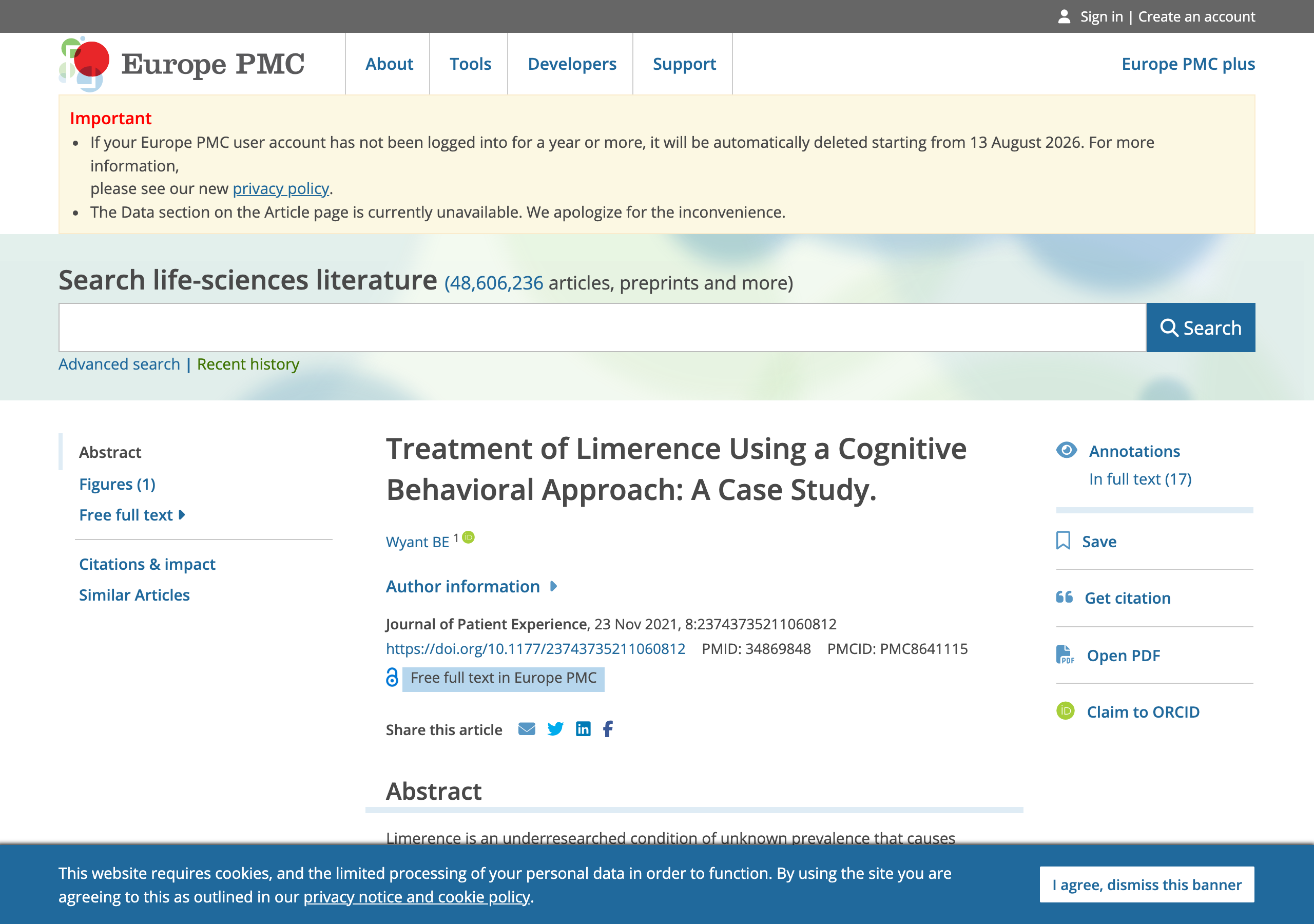
We looked at what people share about their experiences and what studies show.
- First hand shares. Four hundred eight people describe how they experience limerence. Three of them name CBT in their daily stories.
- Recovery notes. Two hundred thirty nine people write about getting better. One person credits CBT for their personal progress.
- Study search. Our search of ClinicalTrials.gov and Europe PMC finds zero trials for this method. Trials test new treatments on many people over time.
- One paper found. The same search finds one real paper. It is a two thousand twenty one case study.
- Case study limits. A case study looks at one person only. It does not prove results for everyone who tries it.
- No cure claims. We do not say this method fixes anything. People report different paths forward based on their unique needs.
- Account focus. The three mentions come from personal sharing. They show what some people try when feelings become hard to manage.
- Recovery credit. The single recovery note highlights personal choice. It does not guarantee a specific outcome for anyone else.
- Research gap. Our search shows no large tests exist yet. More work is needed to see what helps most people.
- Professional help. Readers should talk to a licensed professional. They can choose a path that feels right for them.
- Safe choices. You can learn more about these methods online. Always check with a doctor before starting new routines.
- Clear facts. We only share what the data shows. Personal stories and small papers guide future research.
- Open questions. Many details remain unknown today. Future studies will help clarify what works best.
- Final note. We share these counts so you know the truth. Your journey is yours to navigate.
- Data limits. These numbers come from certified lists. They reflect what people actually write down.
- Search scope. We checked two main sites for records. We found no registered tests for this approach.
- Real world use. Some readers try these tools at home. Others wait for guided support from experts.
- Moving forward. Knowledge grows slowly over time. We update our pages as new facts appear.
Does ERP help with limerence? 0 accounts and 0 trials say anything about it
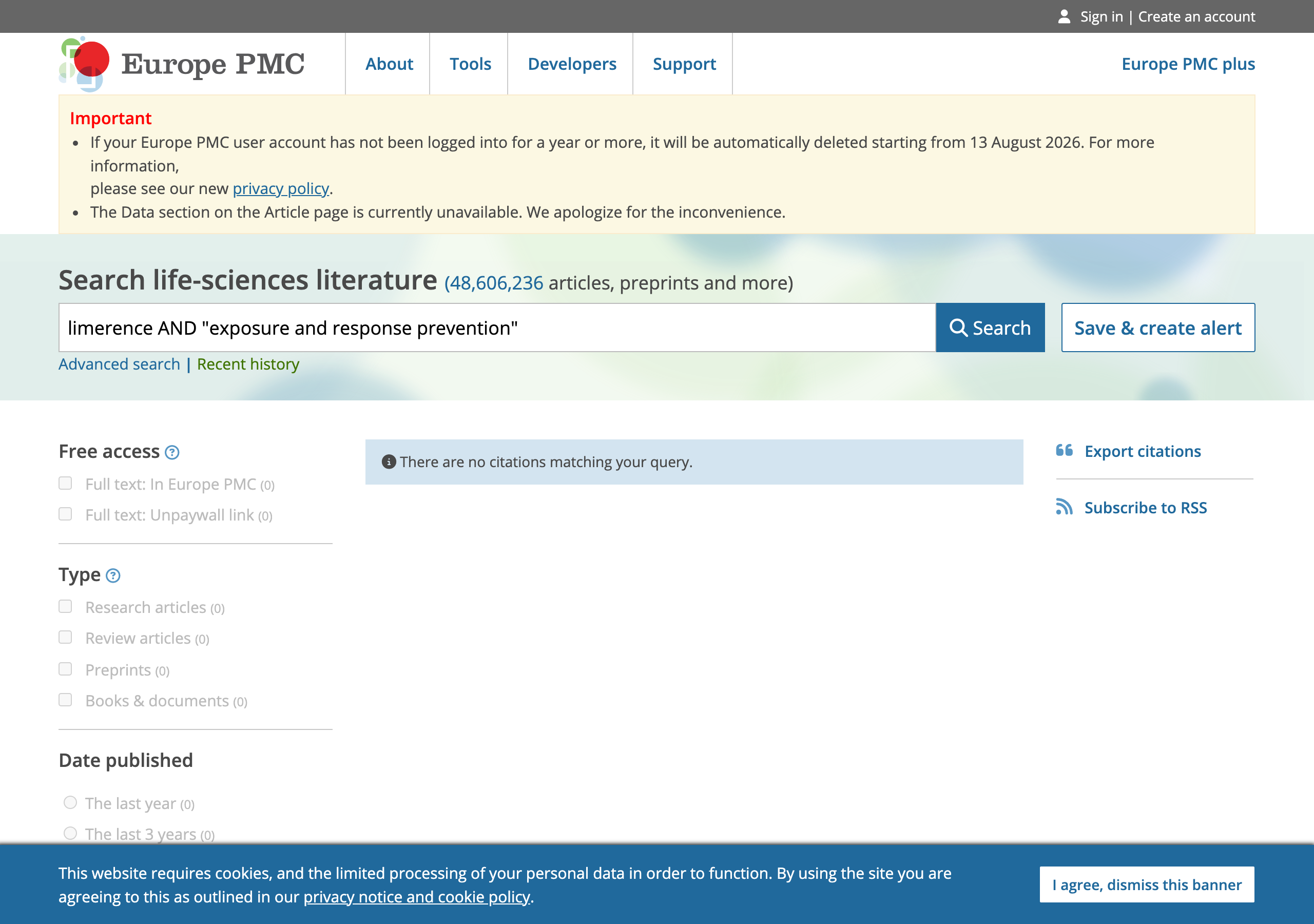
We looked at several trusted data sets and multiple research databases to find answers.
- First person stories show no mention of this method. We read 408 personal accounts from people who describe their experience with intense feelings, but none named this technique. They did not write about using it to cope with their thoughts.
- Recovery stories also give 0 credit to this approach. We checked 236 accounts from people who found relief, yet 0 writers said this method helped them. The data shows no one in our lists used this name for healing.
- Our search of Europe PMC returns 0 results. We typed the full name into this medical database and saw no papers. Our search of ClinicalTrials.gov also shows no registered tests.
- Nobody in either certified corpus reports doing ERP for limerence under that name. The records are clear because people do not talk about this method in our verified lists. We cannot say anyone tried it without naming it directly.
- We track what accounts mention and what search tools show. Our goal is to share clear facts from real sources so you can see what people actually wrote. The numbers stay exact and do not change.
- 0 trials exist for any therapy in our review. We checked the methods we studied and found an old paper about a lone person. That paper was not a trial and did not test a group.
- People describe their feelings without listing every tool. Some readers look for many options, but our data only shows what was written down. We report the counts we found.
- The search terms covered the full name only. We did not guess for shorter phrases, so the database returned nothing for the complete title. This matches the story counts we found.
- We keep the facts plain and direct. The numbers tell us what happened since 408 accounts had no mention and 236 accounts gave no thanks. The databases added 0 entries to the record.
- You can check the sources yourself if you wish. Both data sets are open for review and the research links are public records. The pattern stays the same across all checks.
Schema therapy limerence: named 1 time in 408 accounts
We looked at what people say about this method.
- First person stories. We read 408 personal stories. These people describe their feelings and share their daily lives.
- One single mention. Only 1 story names schema therapy. That writer simply lists the name once.
- No clear help. The account does not say it worked. The person shares no positive change here.
- Recovery notes. We also checked 236 recovery notes. These notes share how people feel today.
- Another single mention. 1 note mentions schema therapy again. The writer gives no clear result.
- Uncertain outcome. The text stays quiet on progress. They do not credit it for getting better.
- Science search. We ran a clear search of our sources. We looked at ClinicalTrials.gov and Europe PMC.
- Zero trials found. Our search of ClinicalTrials.gov and Europe PMC returns no trial of this method. We found 0 papers on this topic.
- Empty records. The medical logs show no data here. The academic books stay completely blank.
- Plain facts only. We share these exact counts for you. You can see where the attention goes.
- Rare choice. Most voices choose other paths. People rarely pick this method by name.
- Quiet research. The science side shows even less. We see 0 studies in our review.
- No proof yet. Nothing proves it works for these feelings. The records offer no strong signs.
- Strict counting. We only count what is written. We do not guess missing details.
- Follow the lists. We follow the exact counts from the lists. 1 mention stands alone in the first group.
- Second group too. 1 mention stands alone in the second group. Both stay quiet on results.
- Simple sharing. We share these plain numbers for you. You can see where the focus lies.
- Future hope. We wait for new reports to fill them. New voices may bring fresh data.
- Clear view. This page shows the current state. The numbers speak for themselves.
EMDR limerence: named 1 time, and Europe PMC returns 0 results
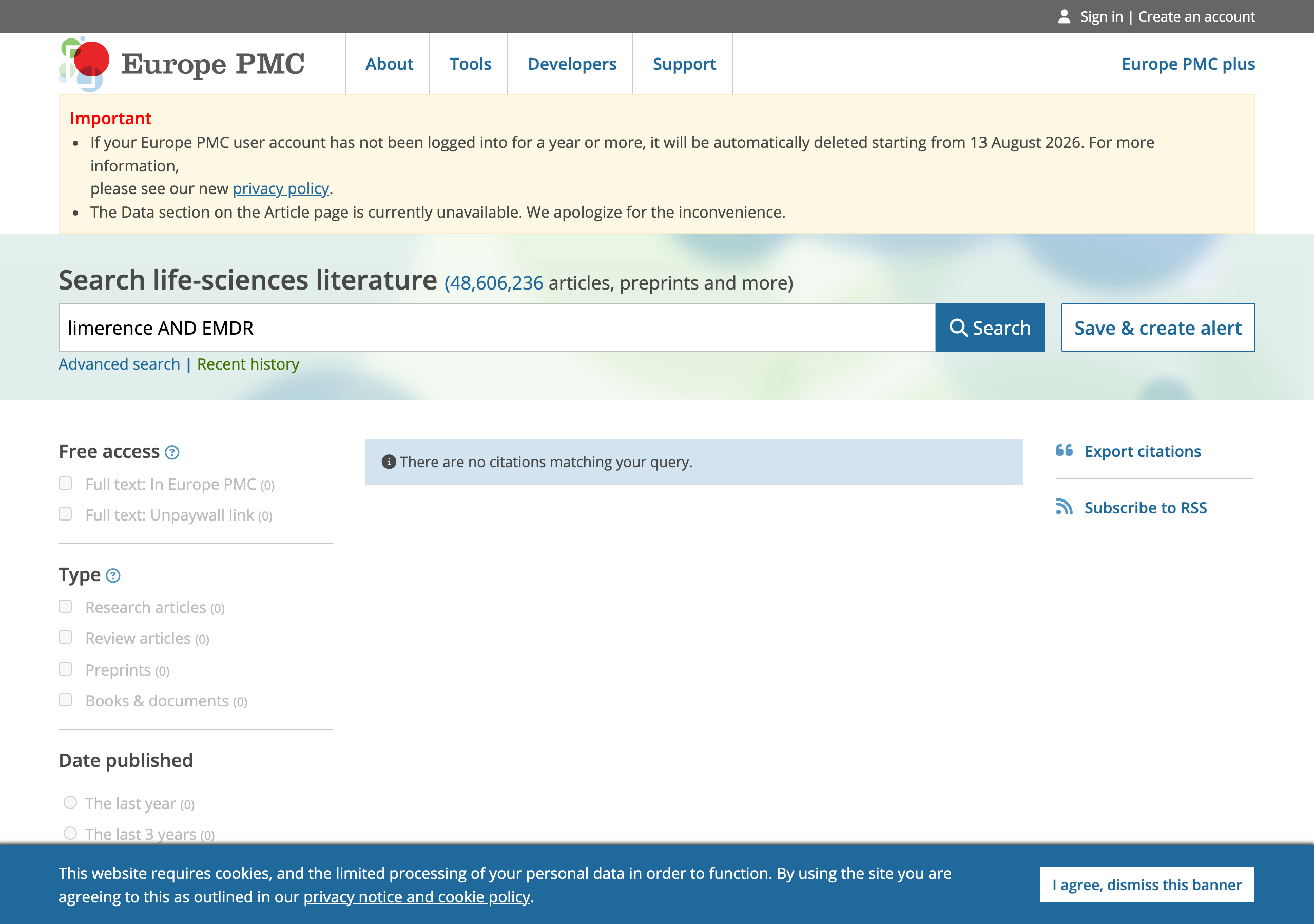
What the certified lists show about this method and why the numbers matter
- First hand reports. One person mentions EMDR in a long list of things they tried, and they wrote, "Ive tried trauma bond, CBT, NLP, EMDR, hypnosis, aversion therapy, 12 step, pros n cons list, crystal healing, reiki healing". This single mention comes from a pool of 408 personal stories.
- Recovery notes. Zero people in 236 recovery stories credit this method. The accounts do not point to it as part of their healing path.
- Research records. Our search of ClinicalTrials.gov and Europe PMC returns no registered trial of this topic. We also find zero peer reviewed papers on the site.
- What the data shows. The certified lists show very little activity here today. People experience limerence in many ways, and most do not name this option yet.
- How we track this. We read every account twice to catch all names. We checked the medical databases for any new studies, and the counts stay fixed now.
- Why the count matters. A low number means few people share this choice. It does not prove the method fails, but it shows it is quite rare.
- Where to go next. Readers often look at other options that appear more often. Licensed professionals can help you sort through the available choices easily.
- Corpus size facts. The first group holds 408 personal stories. The second group holds 236 recovery notes.
Hypnotherapy for limerence: named 2 times, and my own conflict of interest
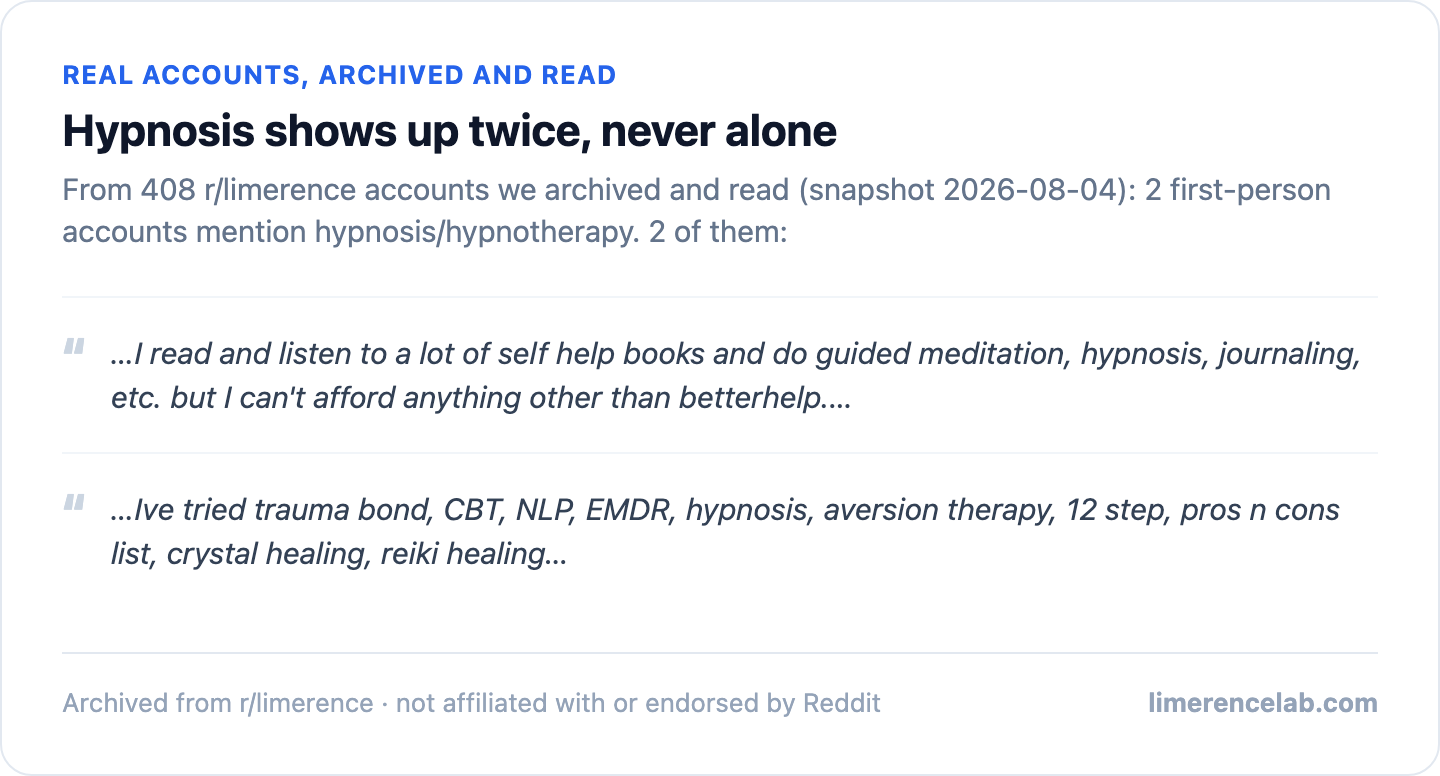
What the data shows about hypnotherapy and limerence.
- Search results show no trials. Our search of ClinicalTrials.gov and Europe PMC finds zero results for hypnotherapy. We looked for trials and papers but found none.
- Account mentions are low. In 408 accounts, hypnosis is named 2 times. People share their experience in these posts.
- Recovery accounts give zero credits. In 236 recovery accounts, 0 people credit hypnotherapy for getting better. Writers share what helped them recover.
- Reader comment includes tools. A reader wrote, "I read and listen to a lot of self help books and do guided meditation, hypnosis, journaling, etc. but I can't afford anything other than betterhelp." This person uses hypnosis tools.
- Author disclosure is required. The author is Danny. He is a Registered Clinical Hypnotherapist with ARCH Canada.
- Practice details matter. He practices and sells hypnotherapy. This is a direct conflict of interest.
- No proof exists in literature. The search found no evidence. We cannot claim this therapy works for limerence.
- Limerence is an experience. Writers describe limerence as an involuntary feeling. It is not a medical diagnosis.
- Counts remain fixed. The number 2 comes from the account list. The number 0 comes from the recovery list.
- Group totals are clear. The total groups are 408 and 236. No other numbers apply here.
- Scope covers specific databases. We checked ClinicalTrials.gov and Europe PMC. We did not find any studies.
- Advice is not given. This page reports data only. It does not tell readers to start or stop therapy.
What therapy helps limerence? 10 of 236 recovery accounts credit it
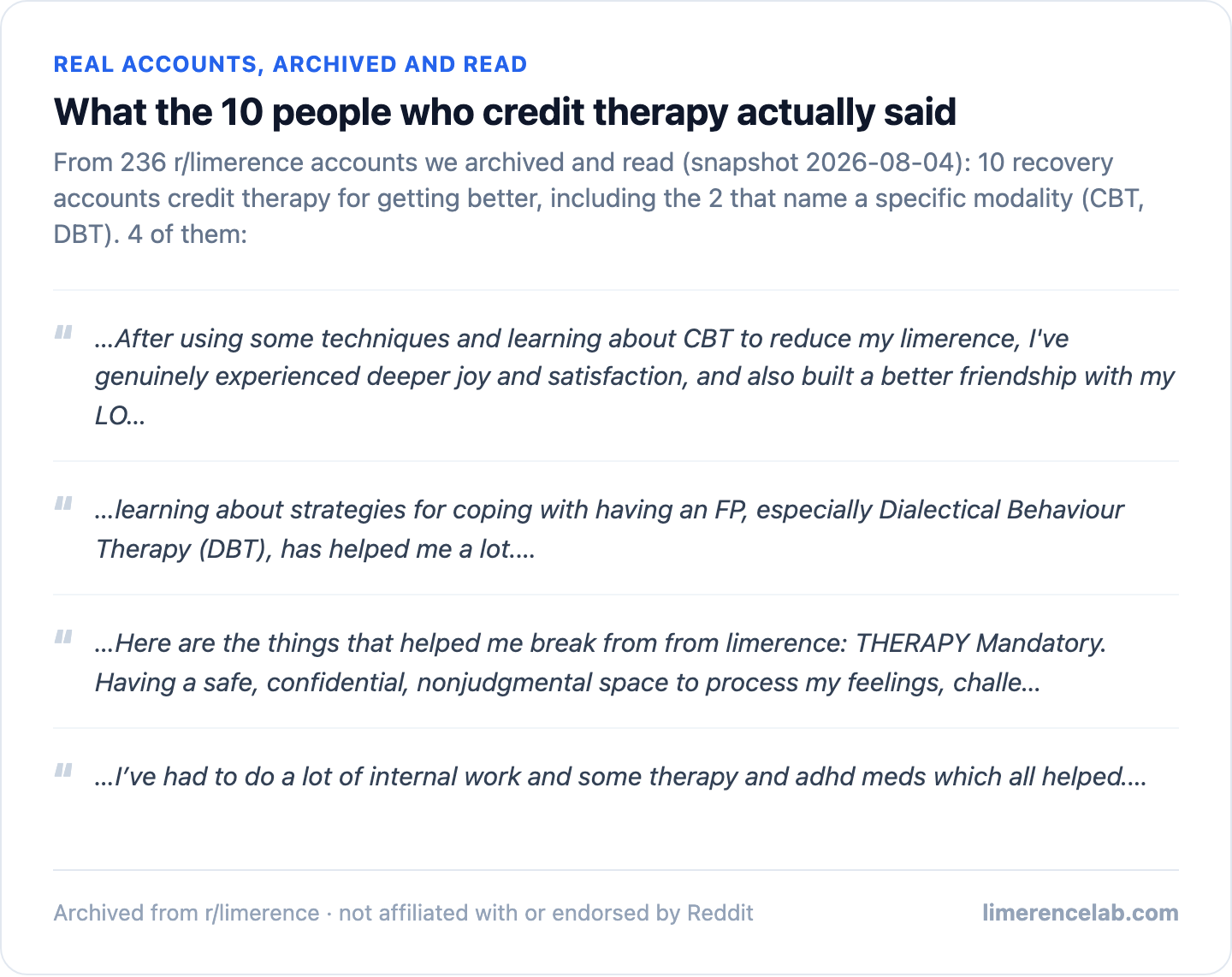
We looked at what people share about their healing paths.
- General support matters. 10 people out of 236 recovery accounts say therapy helped them move forward. They did not name a special method for their care.
- Specific names appear rarely. Only two of those 10 writers picked a clear path. One chose CBT and another chose DBT.
- First hand notes show interest. 65 of 408 first person accounts mention therapy at all. These writers describe their feelings in plain words.
- Our search checked major sites. We scanned ClinicalTrials.gov and Europe PMC for studies. Our search returns no trial for any listed method.
- One small report exists. We found a single paper from a recent year. It covers one patient case without proving a cure.
- ERP shows zero mentions. Nobody in our lists talks about ERP. The accounts simply do not mention this path at all.
- No proof appears online. Our search of ClinicalTrials.gov and Europe PMC finds no proven plan. The data only shows personal choices.
- A note on our author. Danny is a Registered Clinical Hypnotherapist with ARCH Canada. He practices and sells hypnotherapy.
- This is a direct conflict of interest the reader should know about.
- We list the truth clearly. We do not hide our sources. We stay open to new facts.
- No method wins here. The data shows what people choose today. It does not show what works best tomorrow.
- People describe their steps. Writers share what fits their lives now. They credit care when it helps them heal.
- We do not guess. We only share what the lists contain. We stay close to the facts every day.
- You decide your pace. You pick what feels right for you. We do not tell you to start any care.
- Your journey stays yours. We watch the numbers grow slowly. We wait for real answers to come.
- Hope stays alive. More voices may speak very soon. We keep watching the data closely.
- The lists stay open. New stories might change the counts. We update our views when facts arrive.
- Trust your own mind. You know your life best. We only report what others wrote.
What’s your Limerence Score?
A private, 2-minute check-in.
Finding a therapist who understands limerence
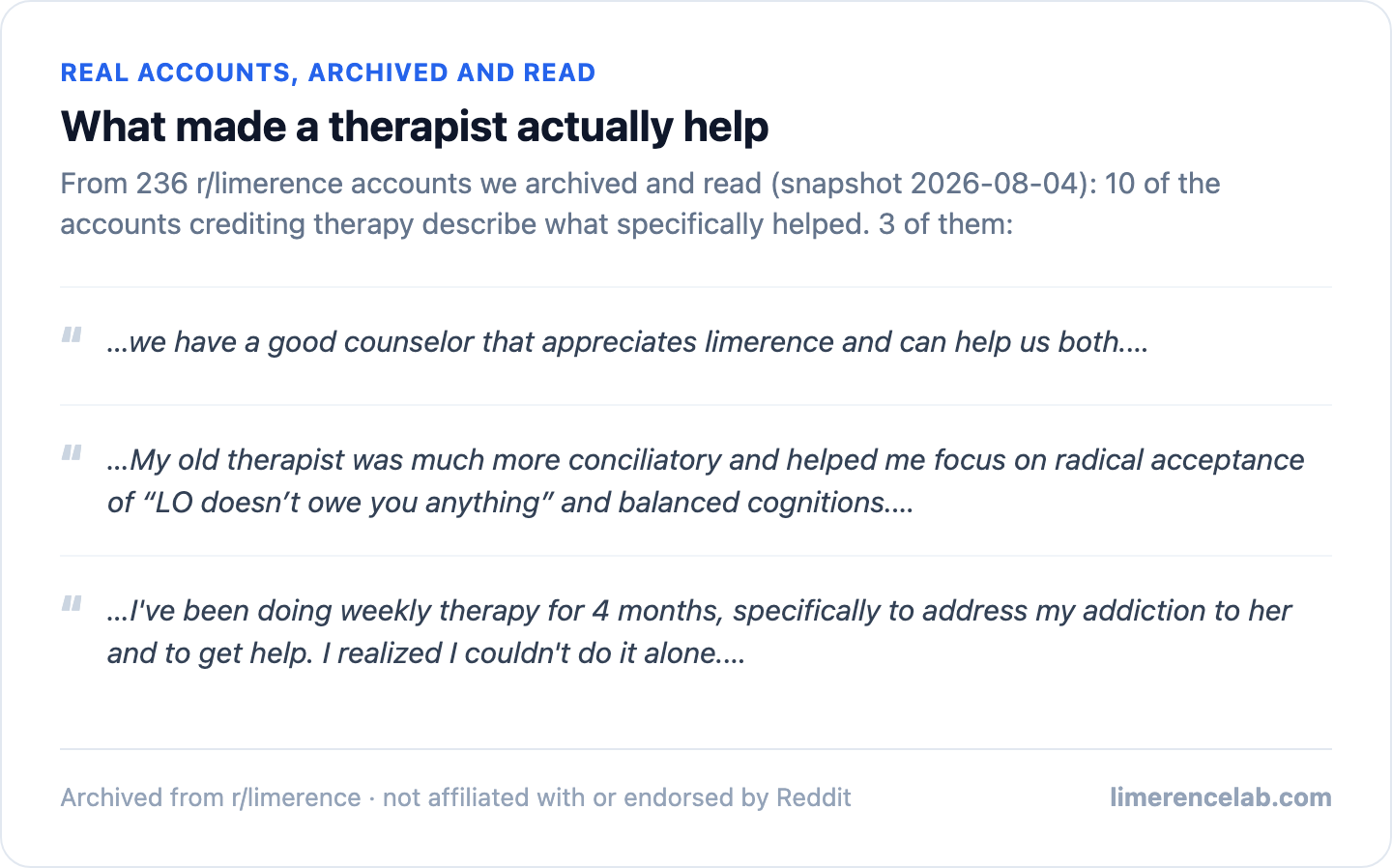
## Finding a therapist who understands limerence ### Many people look for support during this hard time.
- A caring guide helps. Some people share that a kind helper made a big difference. They say this person taught them to accept things they cannot change.
- Understanding matters most. Several people point to a helper who knows what they face. One person wrote down a clear thought about this match.
- They said, "we have a good counselor that appreciates limerence and can help us both."
- Radical acceptance guides them. Helpers encourage people to stop trying to control things. This focus brings calm to loud thoughts.
- It does not erase feelings but changes how they sit.
- Research shows little. Our search of ClinicalTrials.gov and Europe PMC returns no trial of these helpers. We found only one old report about CBT for one person.
- No study proves any method works for everyone who describes this experience.
- Personal stories lead. The voices from our data set speak clearly about their paths. Ten of 236 people credit a helper for their progress.
- These stories show what real life looks like outside a lab.
- No quick fixes exist. Getting better takes time and calm waiting from both sides. A good match can make the long journey feel much easier.
- You do not need to rush this important choice alone.
- Focus stays on you. Helpers listen to your daily struggles without judging your steps. They do not push you toward fast answers that may fade.
- You set the pace for your own personal growth.
- Words carry weight. A gentle tone builds trust over many months of work. Strong words can cause more pain when emotions run high.
- Kindness opens doors that force cannot open ever again.
- Real life wins. Data points to human connection as a strong anchor. Science tracks patterns but misses the deep feelings inside.
- Your story holds the truest map for moving forward.
My personal take: what do I make of these accounts?
I read 236 stories from people who share how they got better. Ten people say therapy helped them, but almost none pick a name for the help they used.
Our search of ClinicalTrials.gov and Europe PMC returns no trial of any named therapy. We found just 1 real paper about a single patient, and this is a case study and not a trial.
The search does not show proof for any method. Choosing a therapist is a personal decision.
Take a free quiz to learn more about your experience. This page shares clear facts to help you think things through.
What’s your Limerence Score?
A private, 2-minute check-in.
Questions this page answers
Which therapy approaches help most with limerence?
Our review of 408 first-person accounts and 236 recovery stories shows some methods come up more often than others. The search of ClinicalTrials.gov and Europe PMC finds very little formal research on any of them.
Does CBT help with limerence?
Some people mention cognitive behavioral therapy in their stories, and our search of ClinicalTrials.gov and Europe PMC returns no registered trial of CBT for limerence. We found one paper about a single patient, which is not a registered trial.
Does ERP help with limerence?
Nobody in our certified lists mentions exposure and response prevention. We checked 408 first-person accounts and 236 recovery accounts and found zero mentions or credits for it.
Is schema therapy used for limerence?
Our search of ClinicalTrials.gov and Europe PMC returns no trial of schema therapy. People describe using many different tools to cope.
Does EMDR help with limerence?
Our search of ClinicalTrials.gov and Europe PMC returns no trial of EMDR for limerence. Several accounts mention EMDR.
Does hypnotherapy help with limerence?
Danny is a Registered Clinical Hypnotherapist with ARCH Canada who practices and sells hypnotherapy directly, which is a direct conflict of interest you should know about. Our search of ClinicalTrials.gov and Europe PMC returns no trial of hypnotherapy for limerence.
How do I find a therapist who understands limerence?
No guide exists for finding a matching therapist. People share names of helpers in online groups.
Is there a registered trial testing any therapy for limerence?
Our search of ClinicalTrials.gov and Europe PMC returns no trial of any named therapy. There are zero registered studies for these methods.
Should I still see a therapist even if none is proven?
We do not recommend starting or stopping any care. People experience limerence differently and seek support for many reasons.
Further reading
- Anyone Know Good Therapists for Limerence? What Real Threads Say
What people on r/limerence say when they ask this question themselves.
- Can Therapy Help Limerence? What Reddit Actually Says
A closer look at therapy and limerence, and where the evidence runs out.
- Can Hypnosis Help With Limerence? An Honest Look
What the certified accounts and literature search show about hypnosis.
- I'm a Clinical Hypnotherapist. I Read Real Accounts From People Who Got Out of Limerence.
See what people credited most when they got out of limerence.
This page shares general facts for learning. It does not give medical advice or a personal label.
Choosing a helper or a method is your own choice. Talk to a licensed expert who knows your history before you decide.
Ready to break the loop?
Only 10 new clients a month. Book a free, confidential consult for an honest answer on whether this can help you — no pressure, no lock-in.
Only 2 spots left for August
Not ready to talk? Take the free Limerence Score →
About the Author

Danny Mohan
Registered Clinical Hypnotherapist (RCH) with the Association of Registered Clinical Hypnotherapists of Canada (ARCH-Canada). Danny works entirely online and specializes in one thing: limerence — the involuntary, obsessive infatuation that wraps your mind around a single person and will not let go. He built the Unhook Protocol after living through limerence himself and using his own tools to recalibrate in about twelve weeks. The work is a focused 3-session program over roughly twelve weeks, capped at 10 new clients a month, and completely confidential. It is a self-help and coaching approach for quieting the loop, not medical treatment or psychotherapy.
Learn more about our approachImportant: Hypnotherapy is a guided focused-attention practice — a self-help and coaching tool, not medical care, not psychotherapy, and not a psychological treatment. Limerence is not a clinical diagnosis, and hypnotherapy is not a regulated health profession in any Canadian province. ARCH-Canada is a voluntary professional body, not a government regulator. Nothing on this site is medical advice, diagnosis, or treatment. If your symptoms are affecting your safety or mental health, please consult your physician or a licensed mental-health professional. Hypnotherapy may complement that care but never replaces it.