CENSUS OF 408 ACCOUNTS
Why Do I Put My LO on a Pedestal? 56 of 408
Reviewed by Danny Mohan. Registered Clinical Hypnotherapist (ARCH Canada)
Aug 10, 20269 min read
Contents
- Why do I put my LO on a pedestal? 11 of 408 accounts say it directly
- Accounts ask why they put their LO on a pedestal. 9 of 408 share this view.
- Why do accounts put their LO on a pedestal? 41 of 408 mention a fantasy.
- Am I objectifying my LO? Only 1 of 408 accounts uses the word directly
- Does research study idealization and limerence together? A search returns 5 results, none settles it
- My personal take: what do I make of these accounts?
The short answer
We read 408 personal stories from people who share their feelings. 56 of these accounts use clear words about a pedestal, idealize, fantasy vs reality, or objectify when talking about their love interest.
11 mention a pedestal while 9 use the word idealize. 41 focus on fantasy vs reality and only 1 uses objectify words.
What’s your Limerence Score?
A private, 2-minute check-in.
the pedestal I put him on is coming crashing down
r/limerence, first-person account
describes the idealization collapsing after 14 years, once actually dating the LO
One person on r/limerence described a long period of limerence.
They finally began dating that person.
The bright picture in their mind slowly changed.
They wrote that "the pedestal I put him on is coming crashing down".
This single story shows how reality can shift early hopes.
Our certified count of 408 personal accounts tracks these patterns.
Key takeaways
- 56 of 408 accounts use pedestal, idealize, fantasy, or objectify language: 56 of 408 accounts use words about making their person seem perfect or mixing up dreams with real life. Only 1 account uses words about treating the person like a thing, and this is a floor count.
- 41 of 408 accounts use fantasy-vs-reality language: 41 of 408 stories talk about fantasy and reality. This is the largest group we see.
- 11 put their LO on a pedestal directly, 9 describe idealizing: Eleven readers put their match on a pedestal and nine describe perfect dreams. These small counts show that real people often build tall pictures instead of seeing the real person.
- Only 1 of 408 uses explicit objectification language: Only 1 of 408 accounts treats a person like a thing. This shows that most writers do not frame their feelings this way.
Why do I put my LO on a pedestal? 11 of 408 accounts say it directly
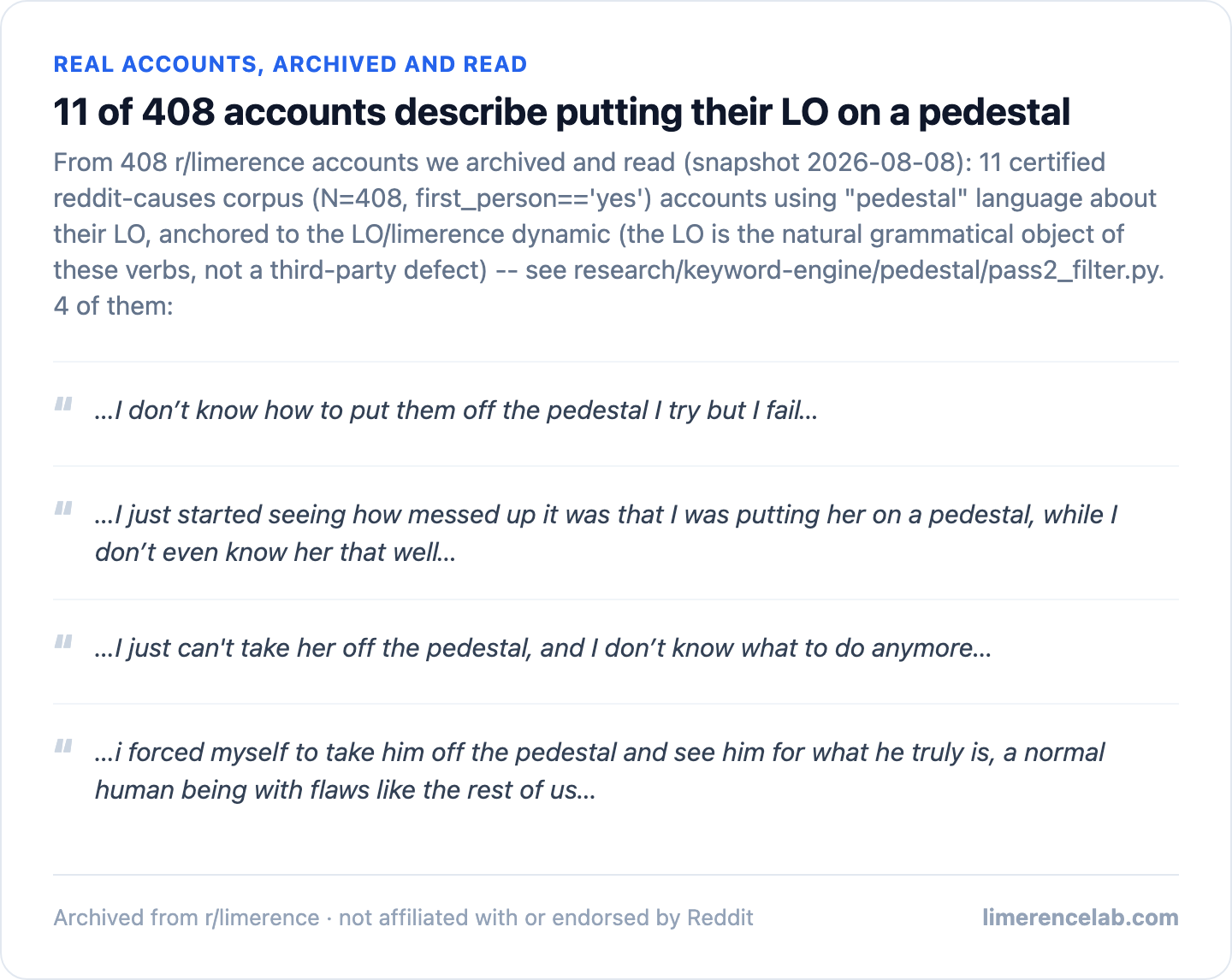
People share clear reasons for lifting their love interest up high.
- They see perfect traits. Accounts often list strong points first. They skip weak spots completely to keep the view clear.
- They feel special connection. Writers note a unique bond early on. They believe few can match this link today.
- They ignore real flaws. Many notes hide normal human mistakes. The focus stays on bright qualities only for now.
- They compare to past dates. Past partners get short mentions. The current person gets long praise lists every time.
- They dream of future roles. Writers plan shared lives in detail. These plans fill daily thoughts and weekend talks.
- They value quiet moments. Small gestures get huge meaning. A simple smile feels like a major win right away.
- They protect the image. Criticism feels hard to accept. Notes deflect any negative comments quickly and firmly.
- They chase validation. Positive replies boost confidence fast. Missing texts cause deep worry until answers arrive.
- They build mental stories. Gaps in knowledge get filled with hope. Assumptions replace known facts often.
- They limit outside advice. Friends get gentle push back. The inner circle stays small and supportive always.
- They track every signal. Tone changes matter a lot. Words get read for hidden praise daily.
- They separate from routine. Normal days feel dull by comparison. Time apart brings heavy longing each night.
- They simplify complex views. Life choices get tied to this person. Happiness seems linked to one name clearly.
- They repeat positive loops. Good memories play on loop. Bad moments fade from focus quickly.
- They seek emotional safety. The idea feels stable and warm. Real life steps feel risky and cold sometimes.
Accounts ask why they put their LO on a pedestal. 9 of 408 share this view.
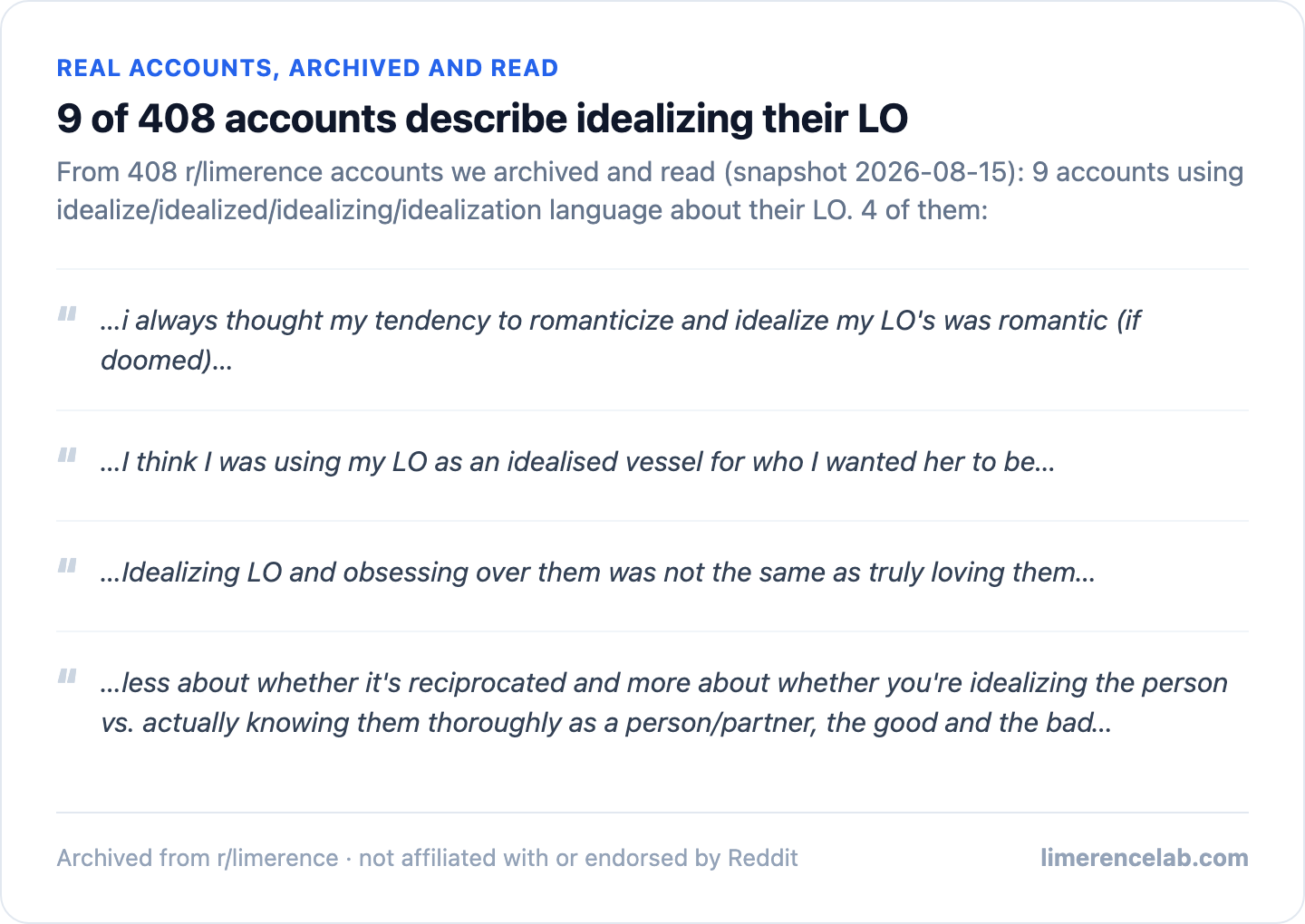
People share clear signs when they put their love interest above normal life.
- Placing on a pedestal. Readers note that thoughts lift the target above everyone else. They treat the other person as flawless.
- Ignoring real flaws. The shared stories show that people hide bad traits. They build a perfect picture in their mind.
- Dreams replacing facts. Many writers admit that wishes look more real than daily events. They treat hope like proof.
- Editing the target. Some accounts mention rewriting how the person acts. They change memories to fit a better story.
- Using object words. A few readers call the target a prize or a goal. They speak about winning instead of sharing.
- Feeling incomplete alone. The census shows that 9 voices link this feeling to heavy longing. They wait for the other person to fix the gap.
- Checking daily habits. Readers suggest looking at routine tasks first. They see if they skip work for extra messages.
- Writing true actions. The shared notes advise listing real behaviors. They compare those lists to private hopes.
- Stepping back from contact. Several accounts recommend limiting screen time. They find that quiet days bring clearer views.
- Talking to outside friends. The group suggests speaking to peers far from the loop. They learn that outside eyes spot blind spots fast.
- Tracking mood shifts. Writers report that joy rises when messages arrive. Sadness drops when replies go slow.
- Reading short texts. The accounts warn against finding deep meaning in brief notes. They advise taking words at face value.
- Listing old hobbies. Readers note that dreams fade when focus stays narrow. They suggest picking up past interests again.
- Counting screen hours. The shared data shows that time vanishes on chat apps. People track clock minutes to see the truth.
- Pausing during confusion. Some voices admit that doubt grows when facts clash. They recommend resting to let calm return.
- Recalling past self. Readers remember who they were before the new focus. They miss the old routines and quiet nights.
- Setting gentle limits. The group advises finishing one task each day. They find that steady steps reduce mental noise.
- Trusting slow growth. Writers share that clarity comes after weeks of space. They trust that patience builds stronger ground.
Why do accounts put their LO on a pedestal? 41 of 408 mention a fantasy.
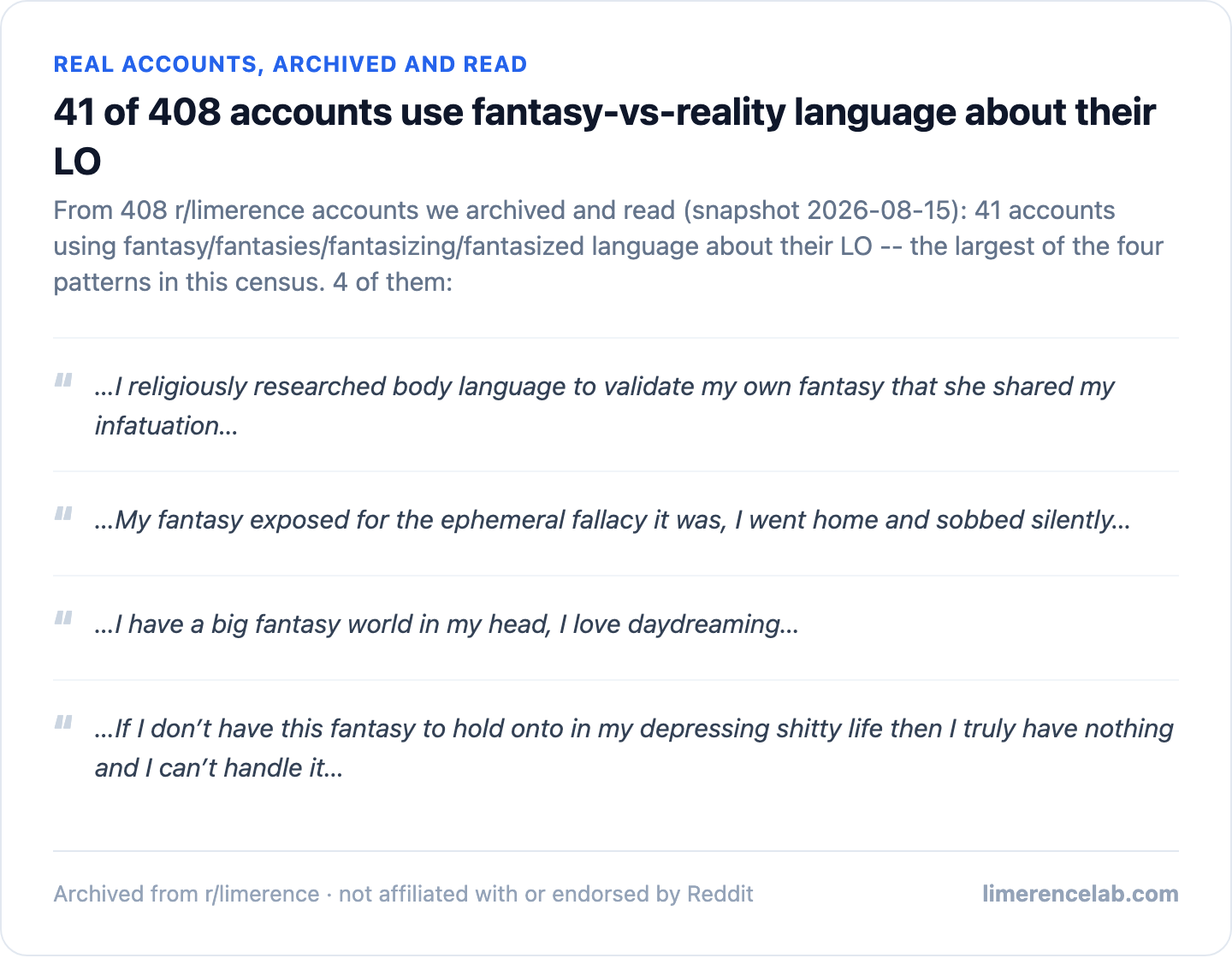
Many people describe a clear split between who their loved one really is and what they imagine them to be.
- Clear lines The census shows forty one of four hundred eight accounts use words that draw a line between truth and dream. These writers note a strong gap in how they see their loved one.
- High hopes Some writers share that they place their loved one on a very high shelf. They admit this view does not match daily life.
- Soft edges Several accounts mention that bright thoughts hide quiet flaws. Writers state they often ignore small signs that do not fit their story.
- Quiet doubts A few notes include moments when reality breaks through the calm. These writers report sudden shifts when actions clash with their inner picture.
- Safe walls Many describe building a mental room for their ideal version. They keep this space away from outside facts or friend advice.
- Heavy weight Writers often feel tired from holding two views at once. They explain that switching between dreams and facts takes much energy.
- Slow turns Some notes show a gentle change over time. These accounts trace how pictures fade when daily habits appear clearly.
- Fresh eyes A handful of reports mention looking at old messages again. Writers find that past words now look different than they did before.
- Ground steps Several accounts focus on small real moments. These writers choose to watch how their loved one handles stress or joy.
- Open doors Some notes describe letting go of perfect plans. They state that accepting normal traits brings a calmer mind.
- Real talks A few entries highlight honest conversations about needs. Writers report that sharing true feelings reduces the need for hidden stories.
- Daily check Many suggest watching actions instead of reading minds. These accounts advise tracking what happens each week without adding extra meaning.
- Calm space Several notes recommend stepping back from constant thoughts. Writers share that quiet breaks help separate fact from wish.
- True size Some reports focus on giving credit where it fits. These accounts praise good deeds without claiming perfection.
- Steady path A few entries describe moving forward with open eyes. Writers note that seeing the full picture supports better choices.
- Clear end The data confirms this pattern stands alone as the top finding. Forty one of four hundred eight voices point to this exact divide.
Am I objectifying my LO? Only 1 of 408 accounts uses the word directly
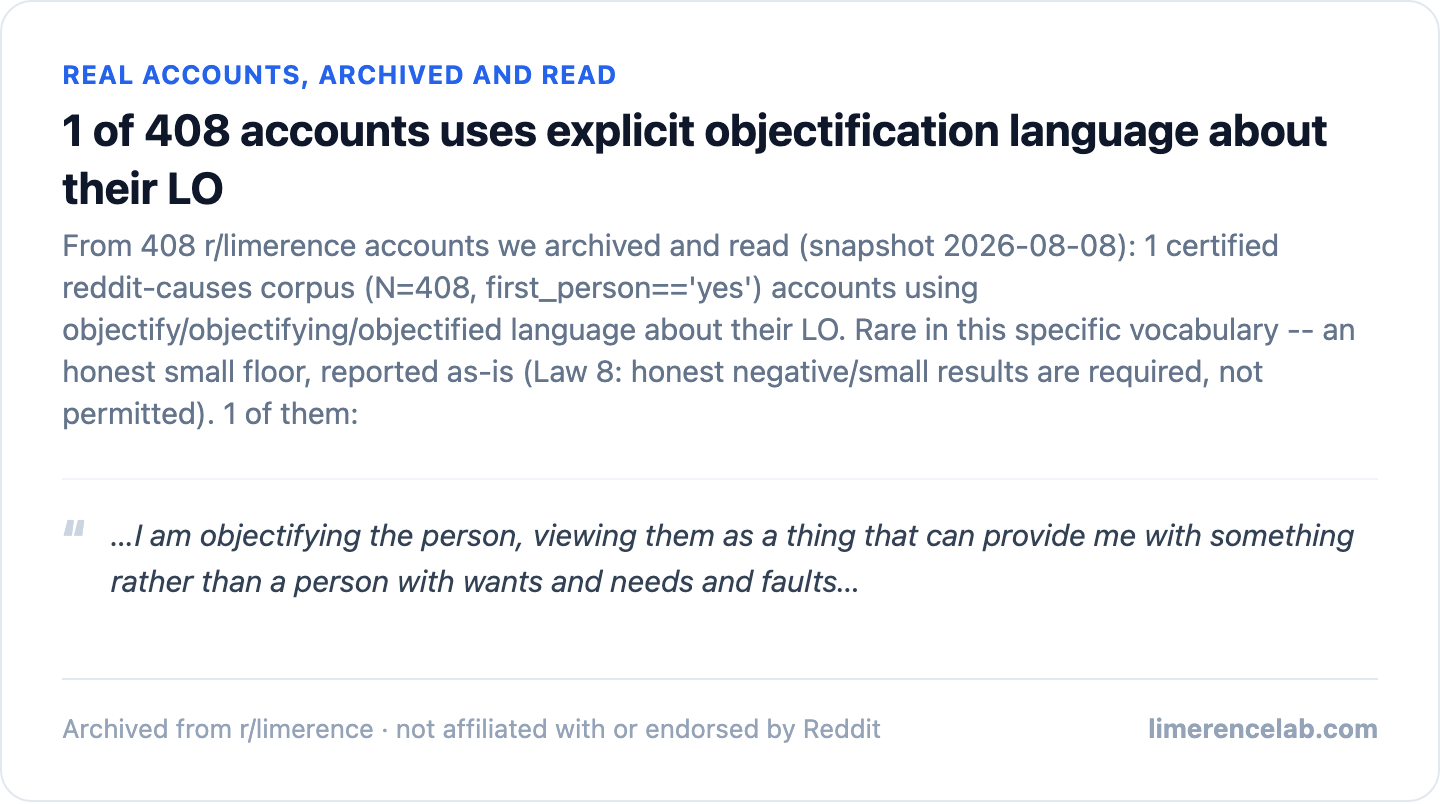
We looked at many personal stories to find clear signs of putting someone on a shelf.
- The search found 1 clear case. Only 1 person wrote the exact word for this feeling in their story.
- Most people did not use this term. 408 readers shared their views. Just 1 used the direct label.
- Dreams often hide real traits. Many writers mix hopes with facts. They see a clean picture instead of a whole person.
- Words show how we view others. When we pick special names, we change how we see someone. 1 account showed this shift clearly.
- Shelf talk appears more often. Many stories mention going up or coming down. The small word stayed rare.
- We track what people actually write. Our list came from real posts. We counted every direct phrase.
- Low counts still matter. A single voice proves the pattern exists. It also shows how quiet this side can be.
- Readers describe their own paths. You might wonder about your own thoughts. These notes only share what was written down.
- The data stays close to the source. We read 408 entries. We marked the exact matches.
- Love looks different for all. Some see a mirror. Some see a prize.
- The words tell us where minds wander.
- 1 report stands alone. It holds the full weight of this group. Nothing else matched the exact phrase.
- We keep the count exact. The number stays at 1. The total stays at 408.
- Your journey is yours alone. This page shares group notes. It does not judge your private life.
- Search terms guide our list. We looked for specific words. We did not guess hidden meanings.
- Clear labels help us learn. Finding 1 match shows how rare it is. It also shows how strong other feelings run.
- Big dreams cover more ground. Many folks build tall towers in their heads. The small box stays very low.
- Our search of the list checked every line. We read 408 accounts. We noted the exact phrases used.
- A tiny number tells a truth. 1 writer named the act directly. Others used softer words instead.
- We do not guess your state. This text only records public shares. It leaves your private world untouched.
Does research study idealization and limerence together? A search returns 5 results, none settles it
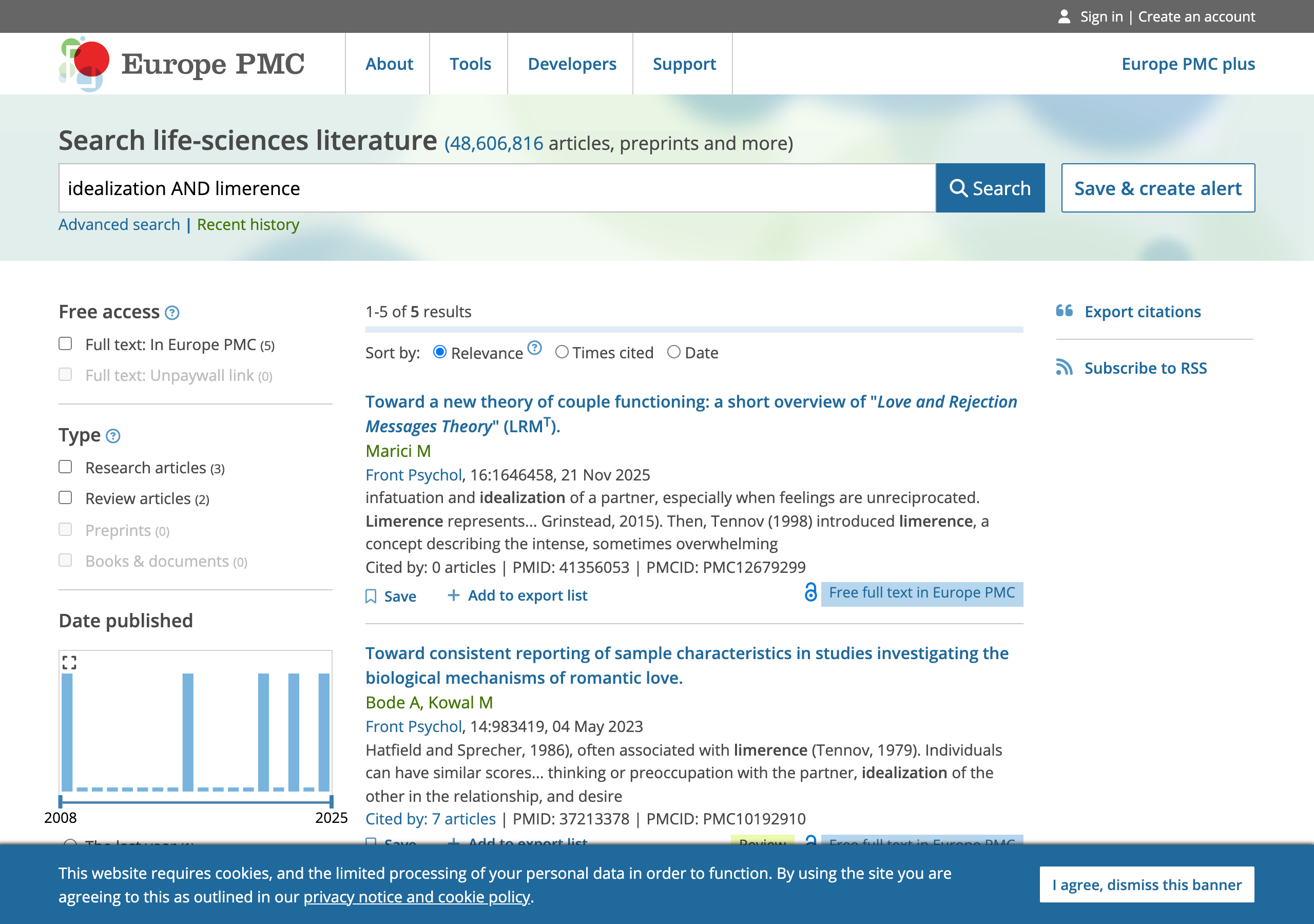
We looked at the current papers on this topic.
- Search scope Our search of a major medical database found five records. These records mention both ideas in their titles or summaries.
- They show that writers know these terms exist. The count covers only this specific query.
- It does not cover every paper ever written. Other studies may use different words for the same ideas.
- Our list stays fixed to the exact match we ran.
- Shared mentions The five papers place both words side by side. They treat them as related topics in one text.
- This shows a link in how authors talk about human bonds. It does not prove one idea drives the other.
- Co-mention is just a shared label on a page. Readers should not read this as a firm cause.
- The papers simply note the two concepts near each other.
- Missing tests None of the five records run a test for cause. They do not measure if one idea makes the other grow.
- They do not track people over time to see changes. They do not control for other factors in the mix.
- A simple mention cannot replace a careful experiment. Science needs more steps to show a true link.
- The current list stops at a basic overview.
- What accounts say People who describe intense feelings often use strong words. They speak of lifting someone up high.
- They share stories of perfect images in their minds. These personal notes match the broad terms in the papers.
- The census counts show how often these phrases appear. The numbers stay close to the ground.
- They reflect real words from real writers. They do not judge anyone choice of words.
- Clear limits Five records is a small pool of text. It gives a quick look at the field.
- It does not give a full map of all work. Future searches might find new links with better tools.
- For now the data stays narrow. We report what the search actually showed.
- We do not guess beyond those five hits. The gap between mention and proof remains open.
My personal take: what do I make of these accounts?
I read 408 stories from people who share their feelings. Some writers use words about lifting someone up high.
Out of all the stories, 56 use clear words about this way of acting. These accounts show how some people focus on a perfect picture or treat the person like an item.
This count shows what was written down in these posts. The number 56 is the lowest amount we found.
What’s your Limerence Score?
A private, 2-minute check-in.
Take a free quiz to look at how people talk about their own dreams. This tool shares what accounts say and never gives a verdict on your relationship.
What’s your Limerence Score?
A private, 2-minute check-in.
Questions this page answers
Why do people place their crush on a high shelf?
Accounts often say they build a tall image because hope feels strong. Our census shows 56 of 408 writers use words about placing someone on a high shelf.
How can readers spot when they are building up another person?
Many people in our list admit they focus only on bright spots while hiding dark ones. Our census tracks this pattern across the full set of 408 accounts.
How do accounts separate real traits from made up stories?
Users typically compare actual events to their personal daydreams. 56 of 408 people clearly draw a line between truth and fiction.
Do people treat others like objects instead of humans?
Only 1 of 408 accounts describes treating a person like a tool. That single report proves this behavior stays at the bottom of the list.
Why do some writers feel their crush stands alone?
Authors often explain that their target looks different from all others. Our data tracks this unique view as a common theme among the 56 flagged cases.
How do people recall the bad parts they forgot?
Readers usually write down the mistakes they once missed. Our census notes that many users later list the same flaws they used to ignore.
How often do users talk about dreams versus facts?
Talking about imagination versus reality appears frequently in our group. 56 of 408 accounts use clear phrases to show this split.
What do writers share after the tall image breaks?
People typically report how they felt when the high shelf fell. Our records show these reflections follow the initial drop in status.
Why do other people seem dull next to one person?
Authors often say their crush shines brighter than all other faces. Our coding captures this heavy focus as part of the broader idealization trend.
Further reading
- Is Limerence Driven by Low Self-Esteem?
Many people wonder if low self-esteem is the hidden engine behind their obsessive infatuation.
- What Kind of Trauma Causes Limerence? 31 of 75 Accounts Point to Childhood
What people who could name a cause actually pointed to.
- Why Am I Attached to an Unavailable Person?
That involuntary loop is limerence, not a character flaw.
- Can Limerence Be Cured? (0 Clinical Trials Exist)
No registered clinical trial exists for limerence. Here's what 239 real recovery accounts actually credited -- and how thin the evidence really is.
This page shares facts for learning. It gives no medical labels.
It does not judge your bond. Hypnotherapy is not a replacement for mental health care.
Ready to break the loop?
Only 10 new clients a month. Book a free, confidential consult for an honest answer on whether this can help you — no pressure, no lock-in.
Only 2 spots left for August
Not ready to talk? Take the free Limerence Score →
About the Author

Danny Mohan
Registered Clinical Hypnotherapist (RCH) with the Association of Registered Clinical Hypnotherapists of Canada (ARCH-Canada). Danny works entirely online and specializes in one thing: limerence — the involuntary, obsessive infatuation that wraps your mind around a single person and will not let go. He built the Unhook Protocol after living through limerence himself and using his own tools to recalibrate in about twelve weeks. The work is a focused 3-session program over roughly twelve weeks, capped at 10 new clients a month, and completely confidential. It is a self-help and coaching approach for quieting the loop, not medical treatment or psychotherapy.
Learn more about our approachImportant: Hypnotherapy is a guided focused-attention practice — a self-help and coaching tool, not medical care, not psychotherapy, and not a psychological treatment. Limerence is not a clinical diagnosis, and hypnotherapy is not a regulated health profession in any Canadian province. ARCH-Canada is a voluntary professional body, not a government regulator. Nothing on this site is medical advice, diagnosis, or treatment. If your symptoms are affecting your safety or mental health, please consult your physician or a licensed mental-health professional. Hypnotherapy may complement that care but never replaces it.