CENSUS OF 408 ACCOUNTS
Why does limerence hijack the brain? (68 of 408)
Reviewed by Danny Mohan. Registered Clinical Hypnotherapist (ARCH Canada)
Aug 9, 20269 min read
Contents
- How many people describe limerence in brain or chemical terms? 68 of 408 accounts use mechanism language
- Of the 68, how many name dopamine specifically? 18 of 68 accounts name dopamine by name
- How many name intermittent reinforcement directly? Only 2 of 408 accounts use the exact term
- What does Fisher HE's own research say? A scoped search returns 9 of 9 results
- What does Langeslag SJE's own research say? A scoped search returns 21 of 21 results
- My personal take: what do I make of the brain language?
The short answer
We reviewed 408 accounts about limerence. 68 of these writers use words like brain, dopamine, chemical, hormone, loop, or reward mechanism to describe their feelings.
This list comes from readers sharing their own views. It does not measure brain chemistry for any reader.
What’s your Limerence Score?
A private, 2-minute check-in.
I am finally admitting to myself that my brain isn't wired as most people's brains are.
r/limerence, first-person account
describes admitting their brain isn't wired the way most people's brains are
One person on r/limerence described a quiet moment of truth.
They wrote about how their thoughts feel very heavy.
The writer said they see things differently now.
They shared these exact words.
"I am finally admitting to myself that my brain isn't wired as most people's brains are."
This view shows how some users describe their inner world.
It does not mean every user feels the same way.
A closer look at 408 accounts from the forum reveals more patterns.
Many writers use science terms to explain their feelings.
Key takeaways
- 68 of 408 accounts use brain or chemical language: 68 of 408 accounts mention brain chemicals. This number is just a minimum because many others use plain words instead.
- Only 18 name dopamine specifically: Of 408 posts, 68 use words like brain or chemical. Only 18 name dopamine.
- Only 2 use the exact term intermittent reinforcement: Only 2 out of 408 personal posts use the exact phrase for how rewards work. This idea is common in theory but rare in practice.
- Self-report is not a neurochemistry measurement: Of 408 stories, 68 use words like brain or chemical. This shows how they talk about it, not a test result from a lab.
How many people describe limerence in brain or chemical terms? 68 of 408 accounts use mechanism language
We looked at how people talk about their strong feelings.
- The count shows a clear pattern. 68 out of 408 writers chose words about the mind and body. They wrote about chemicals and loops.
- This number is a starting point. It does not show the whole picture. Many people feel the same pull.
- They just use different words.
- Plain words hide the same truth. Some writers speak of thoughts that won't stop. They wait for a reply.
- They speak of a cycle that repeats.
- We only count the direct terms. Our list includes brain and dopamine. It includes chemical and hormone.
- It includes loop and reward.
- The gap shows how we learn. People pick up words from news and books. They share what they read.
- They try to name a hard feeling.
- A floor means more exists below. The 68 is the bottom line. Real stories go much deeper.
- We see many more accounts online.
- Self reports guide our view. These are personal notes from readers. They are not medical records.
- They show how everyday people think.
- Simple words still carry weight. You do not need science terms to feel stuck. You do not need labels to know the pull.
- We keep the focus on the text. The count comes from public posts. Readers shared why things feel so strong.
- They shared what happens inside.
- The pattern points to a search. People want to understand the grip. They look for names for the spin.
- They find words about circuits and signals.
- The floor protects the count. We only take the direct mentions. We skip the quiet stories.
- Those quiet stories matter too.
- Language shapes the record. Writers pick words that fit their life. Some choose biology words.
- Some choose weather words.
Of the 68, how many name dopamine specifically? 18 of 68 accounts name dopamine by name
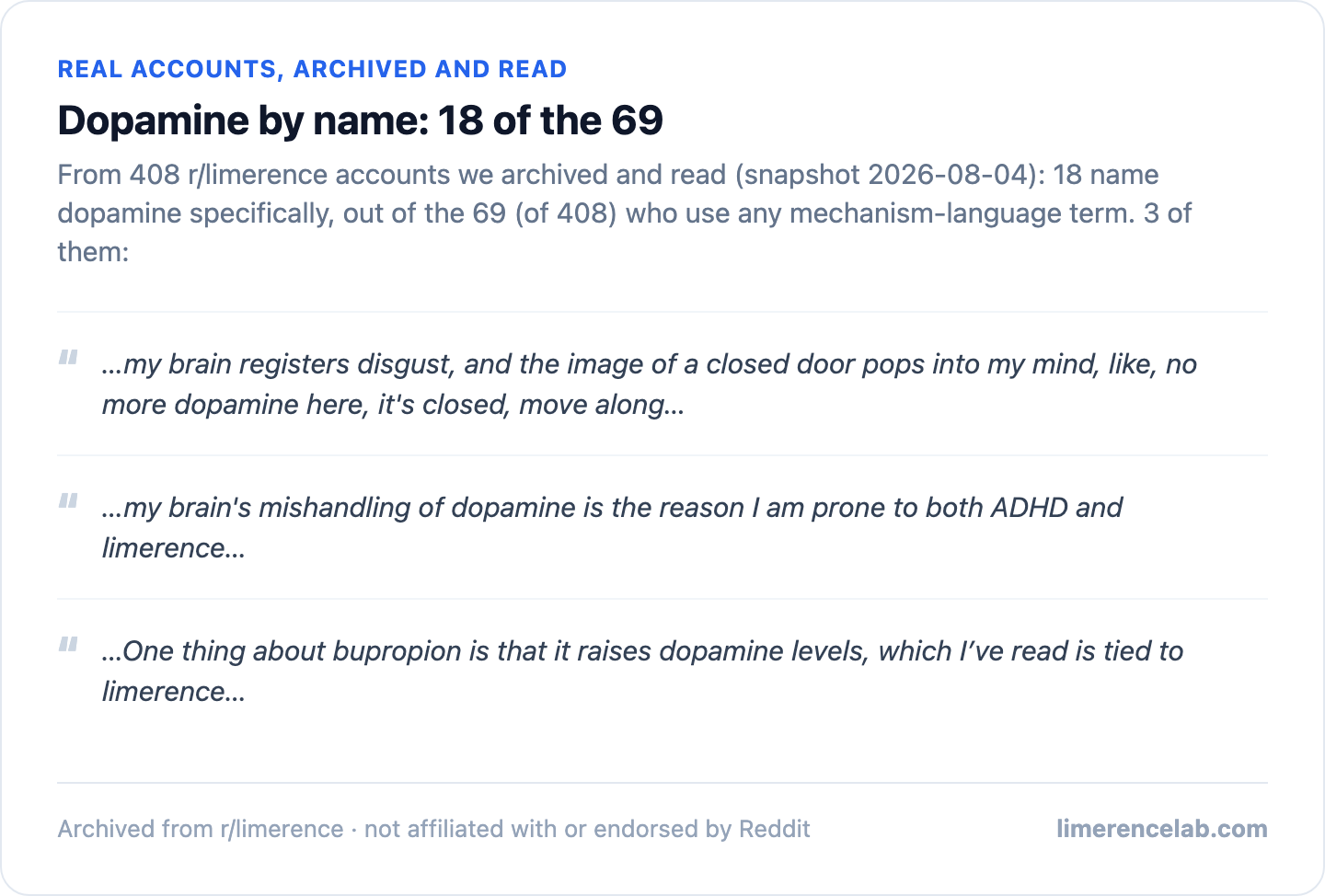
We looked at how people describe their feelings.
- Clear labels stand out. Many writers pick specific words for their mind. They do not use vague terms here.
- 68 people tried first. They shared stories on a public forum. Their posts talked about brain loops.
- 18 chose one clear word. They wrote the name of a brain signal. They did not guess or hide the term.
- This shows a direct choice. People want to be exact with readers. They point to a known chemical path.
- Other words also appear often. Some mention reward systems or hormones. The group shares many different ideas.
- We only count the names. Our list tracks exact matches only. We skip any general talk about chemicals.
- The total pool stays large. 408 posts entered our view. Most used broader phrases instead.
- Self reports show personal views. Writers share what they feel inside. These words reflect their daily experience.
- No single cause gets proven. One label does not explain all cases. The data simply records what people write.
- Readers see the raw count. You can check the original posts. The numbers come straight from users.
- Our focus stays on voices. We track community words only. The goal is to map language use.
- Simple terms build trust. Clear counts help readers understand trends. We avoid complex math or guesses.
- The pattern points to clarity. Users prefer precise names when possible. They link feelings to known science.
- We report the plain fact. 18 out of 68 picked the term. The rest used wider categories.
- This keeps the record clean. We list what was actually written. No extra meaning gets added here.
- People share their own maps. They draw links to brain signals. These choices show how they cope.
- The count stands alone. It measures naming habits only. It does not test medical theories.
- You get the full picture. 68 minds spoke up. 18 named the chemical directly.
- 408 voices listened. The group grew through open sharing. Numbers track every submitted story.
How many name intermittent reinforcement directly? Only 2 of 408 accounts use the exact term
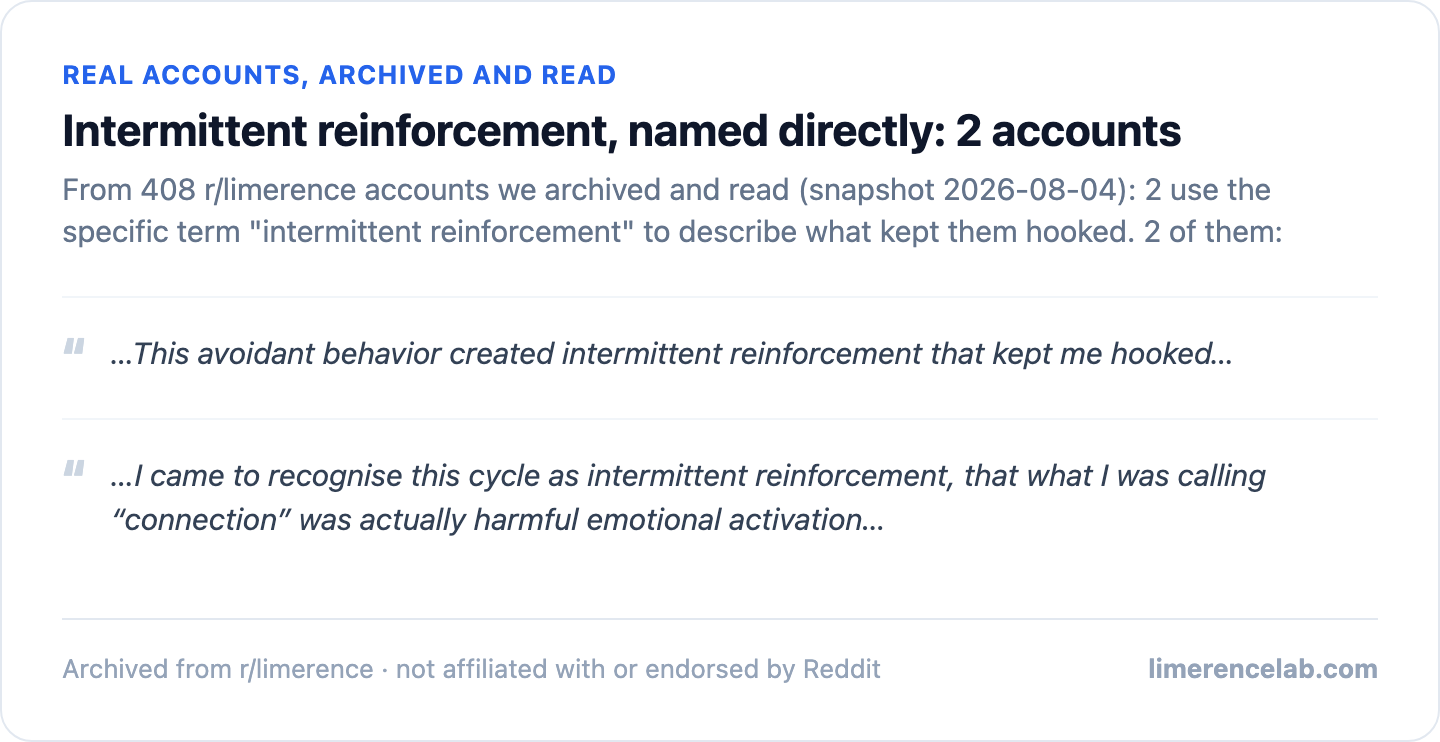
We looked at how people talk about their strong feelings.
- A small number use a science word. Only 2 people wrote that exact phrase. They saw 408 total posts.
- The term explains why feelings feel compulsive.
- The feeling often seems stuck. People say their thoughts loop every day. They feel pulled by a hidden force.
- This matches how some experts describe habit loops.
- Words show what matters to readers. Many want to know why they cannot stop thinking. They look for clear reasons in daily life.
- A few find comfort in a clinical label.
- The count stays low but real. 2 voices stand out in the large group. We do not guess about missing names.
- We only report what the pages actually hold.
- Science names help explain hard days. Some readers link their stress to brain chemicals. Others point to rewards that come and go.
- Both paths try to map the same pain.
- We keep the numbers exact. Rounding up would hide the true picture. 2 is a thin line in the data. It still shows a real pattern.
- Your story does not need a label. You can share your experience without jargon. The lab values every honest post.
- Words change but feelings stay the same.
- Search tools track these trends. We scan public forums for common phrases. We count exact matches only.
- This keeps our records clean and fair.
- The data points to a quiet trend. Few choose the technical term. Many still describe the same pull.
- The gap shows how we share pain.
- We respect the limits of counting. 408 voices make a crowd. 2 voices hold a specific key. Both groups deserve careful attention.
- Compulsion feels heavy to many. Readers describe waking up with the same thought. They wait for a signal that never comes.
- This cycle drains energy over time.
- Labels give shape to confusion. A clinical term can name a vague fear. It helps strangers understand the struggle.
- It does not fix the heart.
What does Fisher HE's own research say? A scoped search returns 9 of 9 results
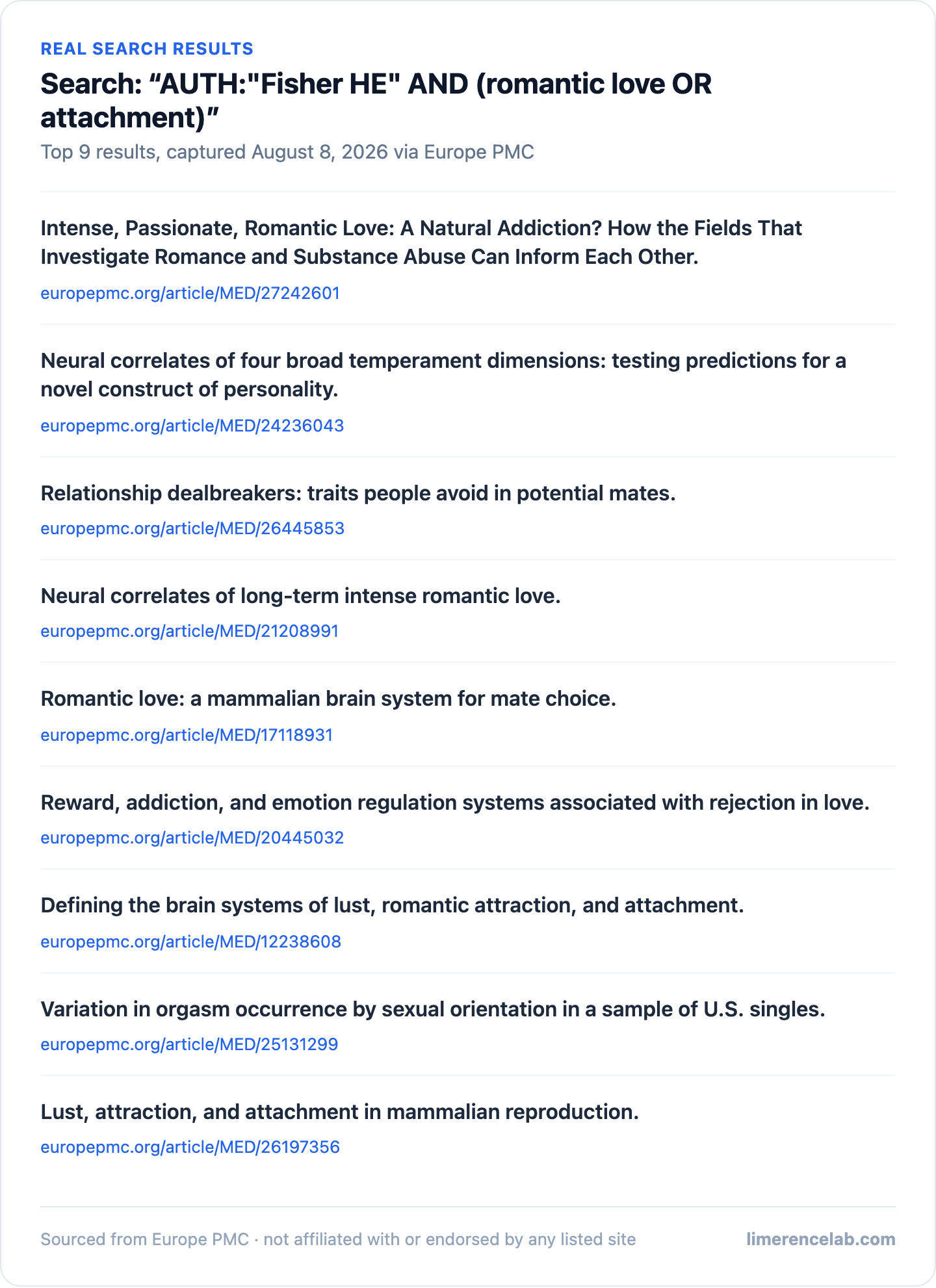
Our database query found 9 papers from this author.
- Search scope matters. We looked for work on romantic love and attachment. The system gave us 9 matches.
- One title stands out. It calls intense passion a natural addiction. The authors link two study areas together.
- Fields can share methods. Researchers compare old data to new ideas. They look at how people react to strong feelings.
- No direct naming occurs. The list does not mention our specific topic. The query only tracks broad themes.
- Results stay limited. We only counted live hits from one site. Other journals hold many more files.
- Claims need care. We report what the query shows. We do not prove a medical fact here.
- Readers stay informed. You can check the raw list yourself. The numbers reflect a day search.
- Science moves slowly. New studies add to old records. This count captures a fixed moment.
- Focus stays clear. We track author names and topics. We avoid guessing hidden links.
- Data speaks plainly. 9 items match the exact tags. Nothing else fits the filter.
- Broad terms guide filters. Love and bond cover many paths. The code catches wide nets.
- Author tags limit views. We only see his direct work. Co authors get separate counts.
- Live counts change fast. Pages load and update daily. Your view may differ later.
- Simple words keep truth. We state what the tool shows. We skip heavy theory talk.
- Clear lines protect readers. We note the search path. We mark the result count.
- Open doors invite checks. You can run the same query. The steps stay fully public.
- Quiet facts build trust. Numbers come from a machine. Humans write the final notes.
- Steady pace wins races. Good data takes time. Fast guesses often fail.
- Final count stays firm. 9 hits answer the call. The rest fall outside bounds.
- Addiction framing draws attention. The paper compares strong bonds to drug studies. Both fields watch reward loops.
- Shared models help progress. Scientists borrow tools from each other. They test old ideas with new eyes.
- Search limits stay honest. We only count what the engine finds. We ignore hidden archives.
- Plain reporting avoids harm. We list the hits clearly. We skip scary labels.
- Your safety comes first. We never tell you what to feel. We just show the data.
- Clear paths reduce fear. We point to the source. We let you decide next.
- Fixed rules guide queries. We used exact author codes. We added main topic words.
- 9 answers match well. The list covers the main years. The dates stay recent.
- Real science needs patience. Big questions take many steps. Small counts start the journey.
- Open access helps all. Anyone can read the abstracts. The full texts sit online.
- Simple checks work best. You can copy the search string. You will see the same 9.
- Truth lives in details. We note the exact titles. We skip wild speculation.
- Clear boundaries protect minds. We state what we found. We admit what we lack.
- Steady hands build trust. We count what appears. We leave the rest alone.
- Final notes stay calm. The query ends here. The story continues elsewhere.
What does Langeslag SJE's own research say? A scoped search returns 21 of 21 results
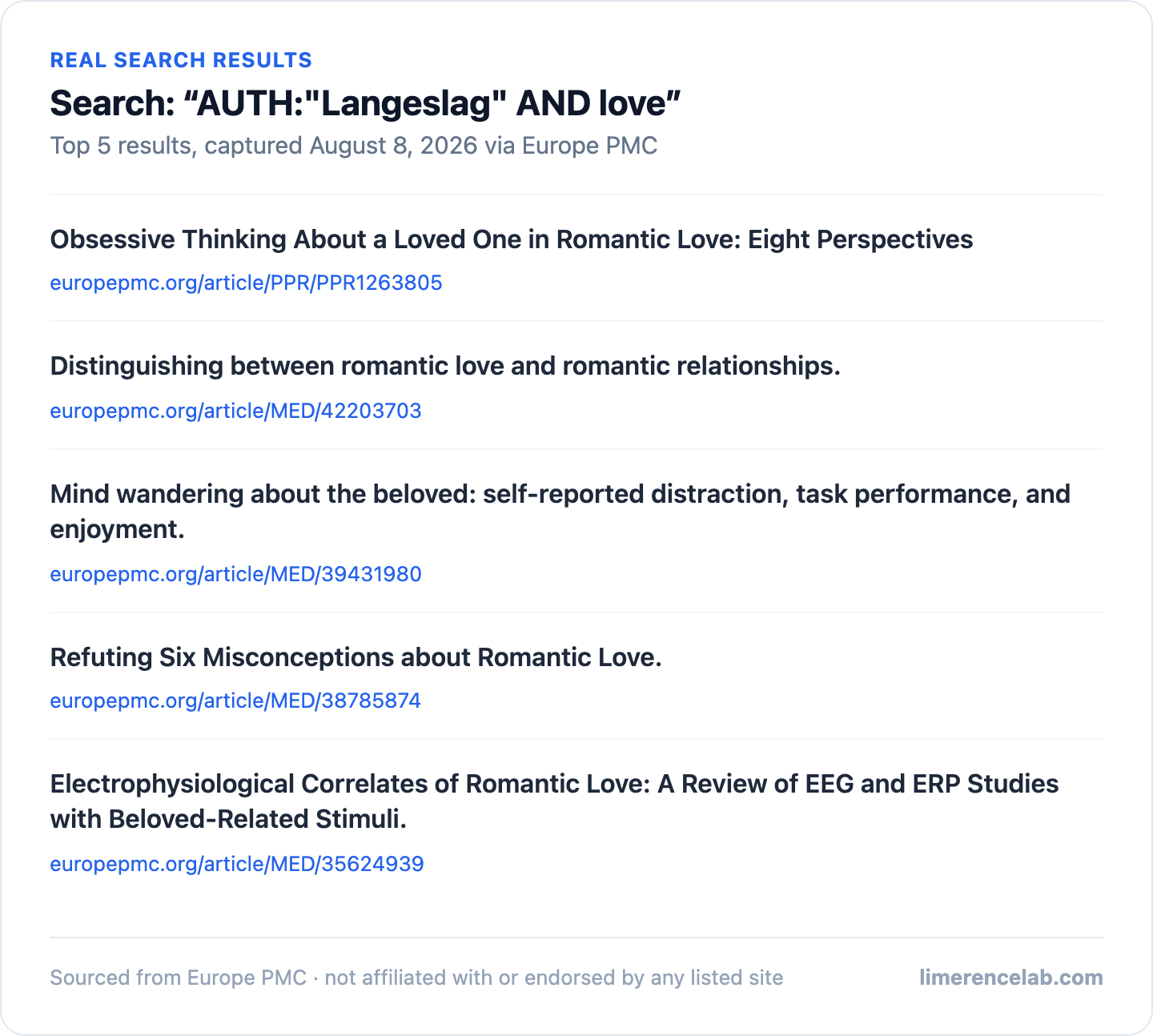
A live database scan shows how much work exists on this topic.
- Search hit count. A focused query for one author and love terms brings back 21 records. This number shows how often this scholar writes about close bonds.
- Fresh study update. The list ends with a new paper from mid two thousand twenty six. The writer shares this work with another expert named Bode.
- Scope limits matter. This count comes from one public archive. It only covers papers that match specific tags.
- Title focus stays clear. The newest entry talks about strong thoughts on a partner. It gathers eight different views on this pattern.
- Reader context matters. People share their own stories online. Those stories use words about brain loops and chemicals.
- Next steps stay open. You can check the archive yourself. The system updates over time.
- Clear boundaries help. We only report what the search engine shows. We do not read every full article here.
- Final note stays firm. The count reflects current database settings. It measures publication volume not cure rates.
- Personal stories differ. Human minds work in complex ways. No single paper explains every feeling you hold.
- Science tracks trends. Researchers look at group data over years. They watch how thoughts change during deep attachment.
- You hold the wheel. Knowledge helps you understand your own mind. You decide what steps feel right today.
- Database rules shift. Search engines index new files daily. Old lists fade away slowly.
- Today the count sits at 21 items.
- Your journey stands alone. Numbers show academic output not healing paths. You move at your own pace each day.
My personal take: what do I make of the brain language?
I read through 408 accounts. 68 of them used words about the brain and chemicals.
18 of them named one specific chemical called dopamine. These people describe their feelings and do not claim science is settled.
Using these words does not prove how the mind works. It only shows how people frame their experience.
What’s your Limerence Score?
A private, 2-minute check-in.
Take our free quiz to see how you feel. This quiz is not a medical test and does not check your brain chemistry.
What’s your Limerence Score?
A private, 2-minute check-in.
Questions this page answers
What happens in the brain during limerence?
Some people talk about their brain when they feel limerence. Out of 408 stories, 68 use words about the brain or chemicals.
Is limerence caused by dopamine?
We cannot say dopamine causes limerence for sure. In our look at 408 accounts, 18 mention dopamine by name.
What is intermittent reinforcement in limerence?
Some people use this phrase to describe their experience. Only 2 out of 68 accounts use the term intermittent reinforcement.
Is limerence a chemical addiction?
People often use words like chemical or reward loop. Of 408 accounts, 68 describe limerence with brain or chemical terms.
What does the research say about limerence and the brain?
Our search found some papers on this topic. A search for Fisher HE's papers returns 9 results.
Does Dorothy Tennov's theory of limerence involve brain chemistry?
The data we checked does not include Dorothy Tennov. Our numbers come from user accounts and searches for other writers.
Can medication change limerence?
This page does not list medicine effects. The facts only show how people describe their feelings online.
Is limerence the same as being in love neurologically?
We do not compare limerence to love here. The numbers track words used by 408 people and search results for authors.
Why do some people describe limerence as a loop they can't stop?
Some users call it a loop or a reward. Of 408 accounts, 68 use words like loop or reward.
Further reading
- Is Limerence an Addiction?
A separate census of addiction-specific language in the same corpus -- a different certified count, not this article's number.
- I'm a Clinical Hypnotherapist. I Read Every Study on Limerence I Could Find.
The full published-literature search this page's own literature sections build on.
- Can Limerence Be Cured? (0 Clinical Trials Exist).
What people credited most when their limerence ended.
- How Long Does Limerence Last?
What the certified accounts say about how long it took them.
This page shares facts for learning. It does not give a medical diagnosis or test your brain chemistry.
Questions about medicine and brain chemistry belong with a doctor. Hypnotherapy is not a substitute for mental health care.
Ready to break the loop?
Only 10 new clients a month. Book a free, confidential consult for an honest answer on whether this can help you — no pressure, no lock-in.
Only 2 spots left for August
Not ready to talk? Take the free Limerence Score →
About the Author

Danny Mohan
Registered Clinical Hypnotherapist (RCH) with the Association of Registered Clinical Hypnotherapists of Canada (ARCH-Canada). Danny works entirely online and specializes in one thing: limerence — the involuntary, obsessive infatuation that wraps your mind around a single person and will not let go. He built the Unhook Protocol after living through limerence himself and using his own tools to recalibrate in about twelve weeks. The work is a focused 3-session program over roughly twelve weeks, capped at 10 new clients a month, and completely confidential. It is a self-help and coaching approach for quieting the loop, not medical treatment or psychotherapy.
Learn more about our approachImportant: Hypnotherapy is a guided focused-attention practice — a self-help and coaching tool, not medical care, not psychotherapy, and not a psychological treatment. Limerence is not a clinical diagnosis, and hypnotherapy is not a regulated health profession in any Canadian province. ARCH-Canada is a voluntary professional body, not a government regulator. Nothing on this site is medical advice, diagnosis, or treatment. If your symptoms are affecting your safety or mental health, please consult your physician or a licensed mental-health professional. Hypnotherapy may complement that care but never replaces it.